June 5, 2026
Editorial Engagement Photography in Chicago: Nora & Austin’s Art Gallery Session
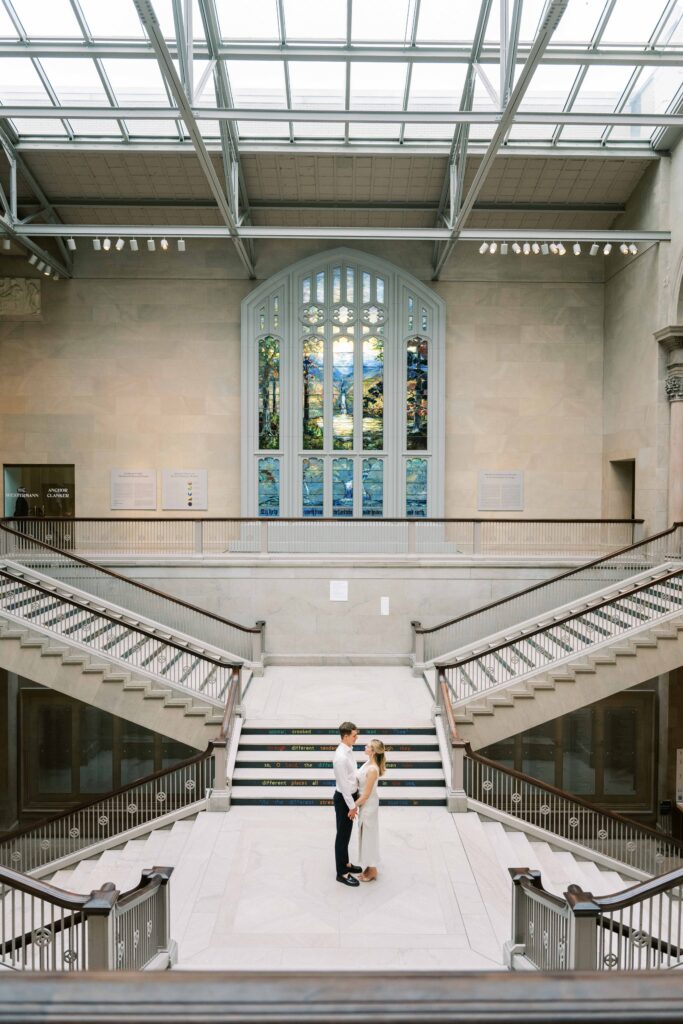
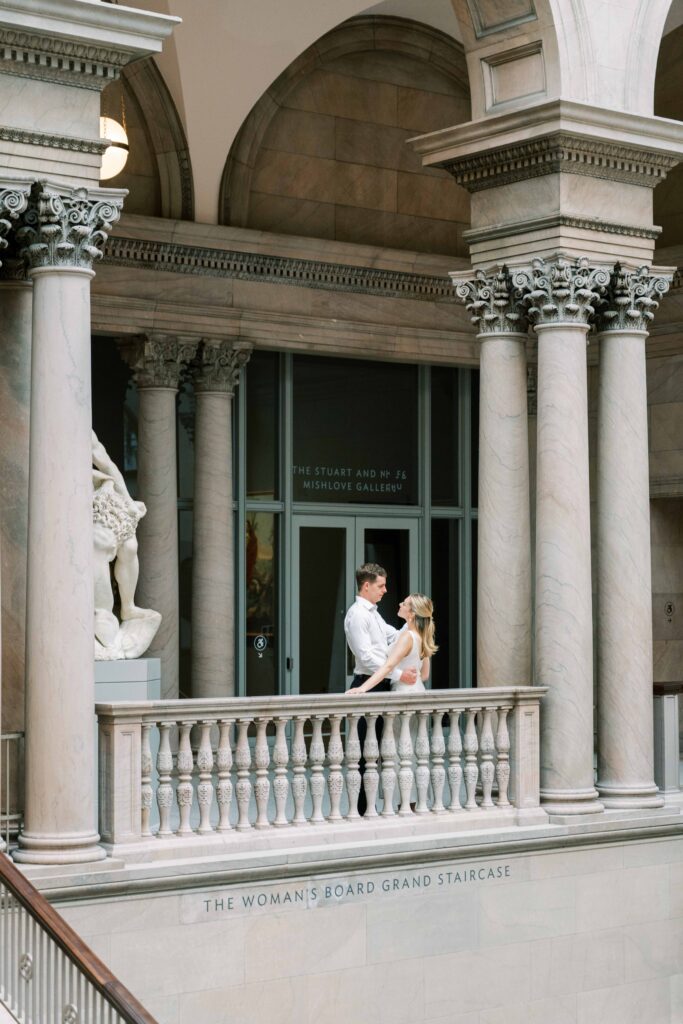
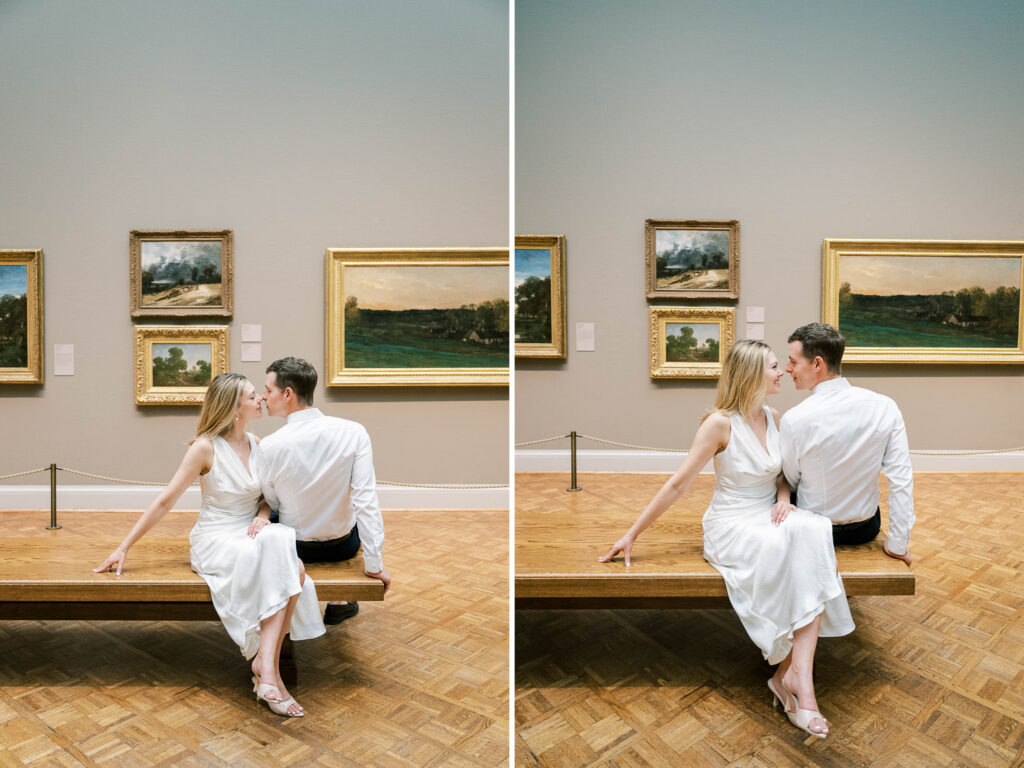
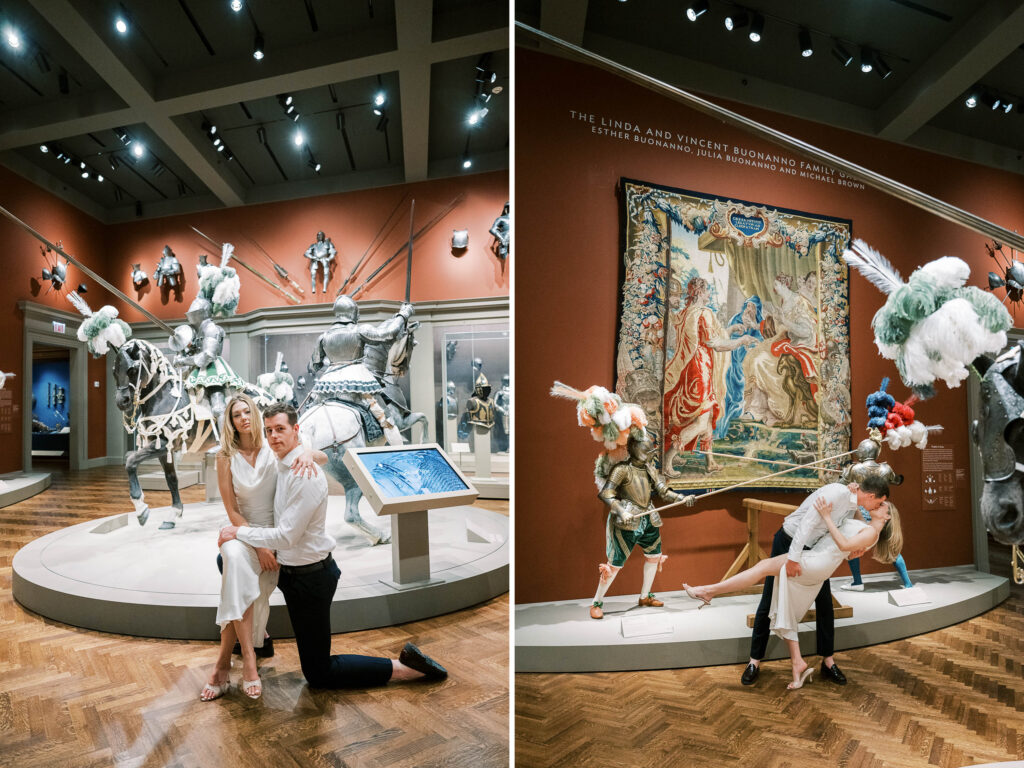
If you’ve been following along for any length of time, you know that I love an art gallery session. I suppose that makes sense as a fine art photographer. A historic, artsy setting pairs so well with my own photography style. But maybe more than that, I find that art inspires art. No matter how many times I visit The Art Institute of Chicago, I seem to find new angles with new ideas to follow. No two couples are the same, so no two sessions are the same. As a love-story photographer, I find that each couple’s distinct personality, preferences, and style shape their session. (For example, in this engagement session, we spent a little extra time in the Arms & Armor exhibit because Austin has a penchant for that historical period. And yes, we took some silly photos, too, which helped them loosen up and find their groove for the rest of the photo shoot.)
Candid Meets Editorial: A Modern Approach to Engagement Photos in Chicago
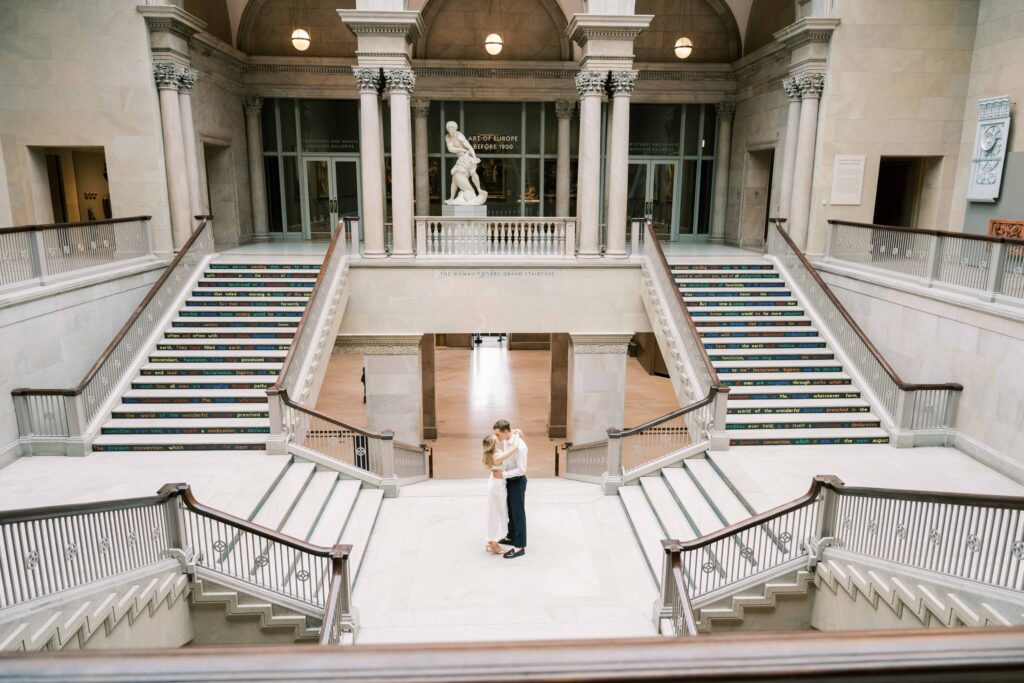
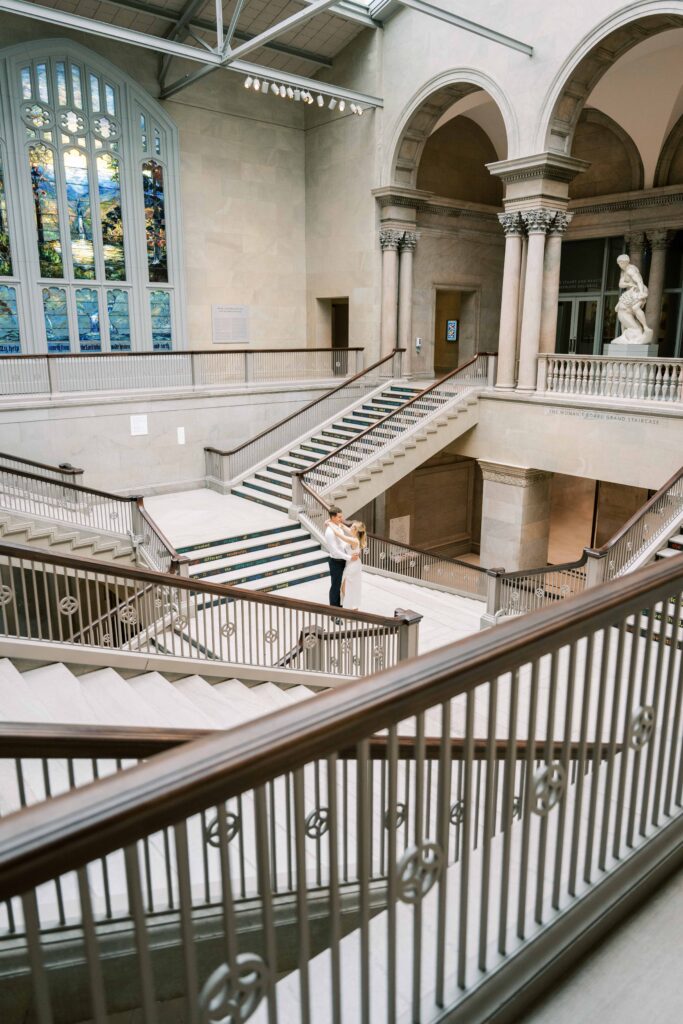
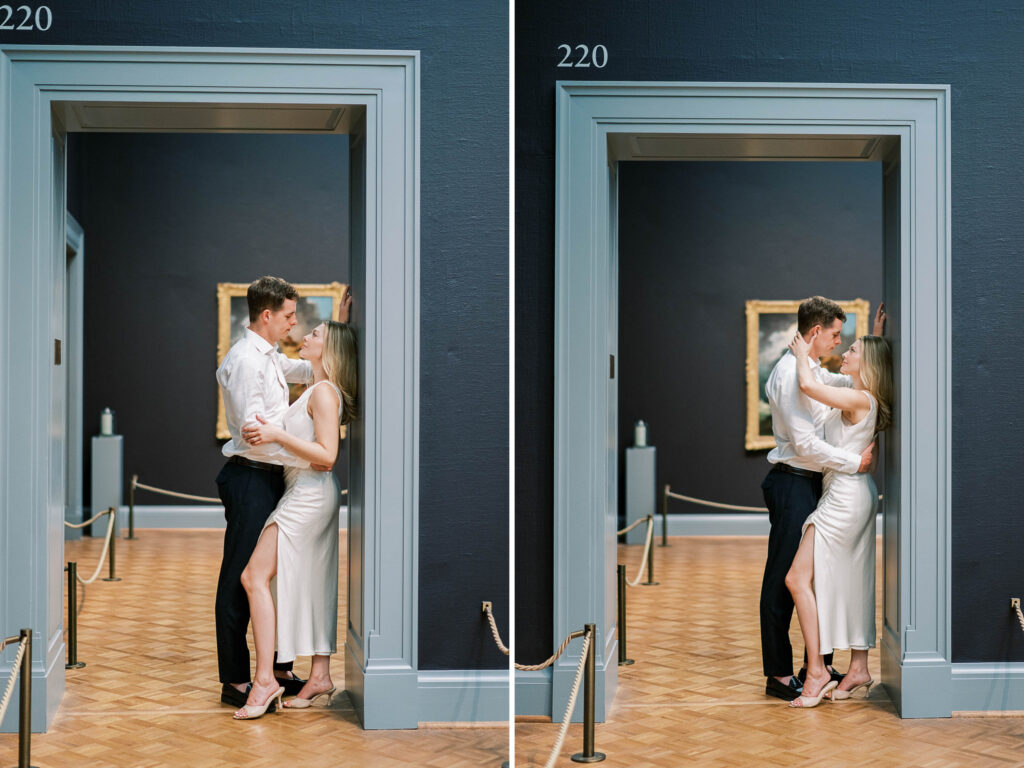
The Art Institute offers more than a beautiful backdrop. It gives a session structure, rhythm, and visual intrigue. The architecture, clean lines, open space, gardens, stairways, and museum surroundings allow each photograph to look composed without feeling stiff. For Chicago couples drawn to fine-art engagement photography, a museum or gallery lends itself to polished, personal, and quietly expressive images.
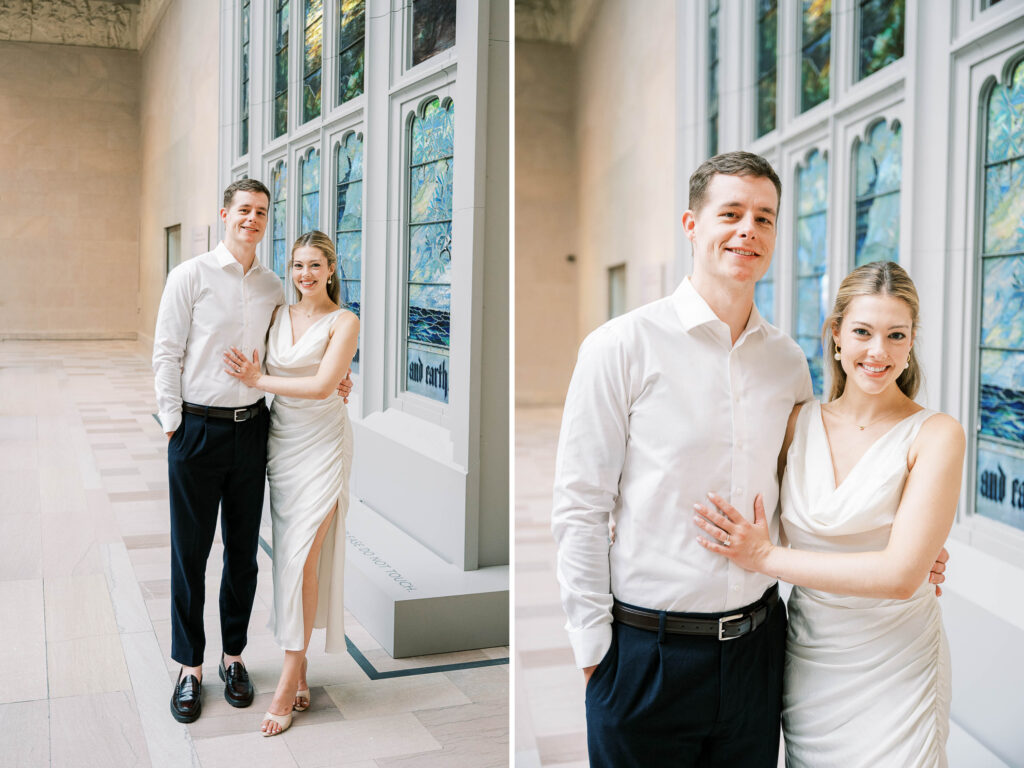
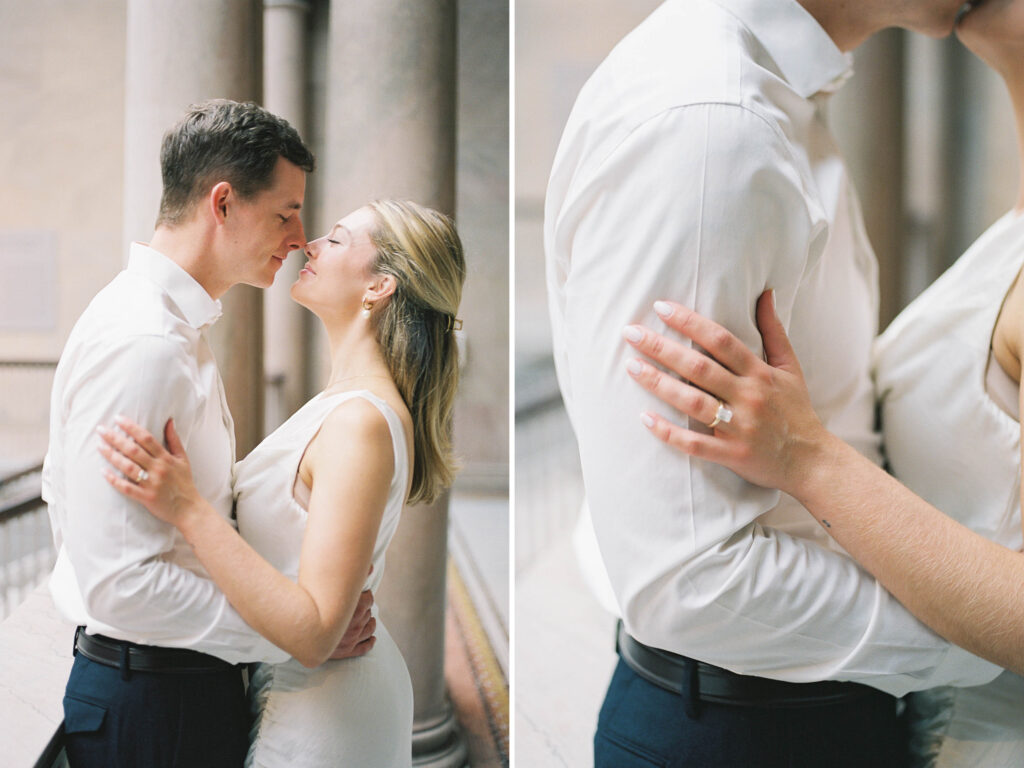
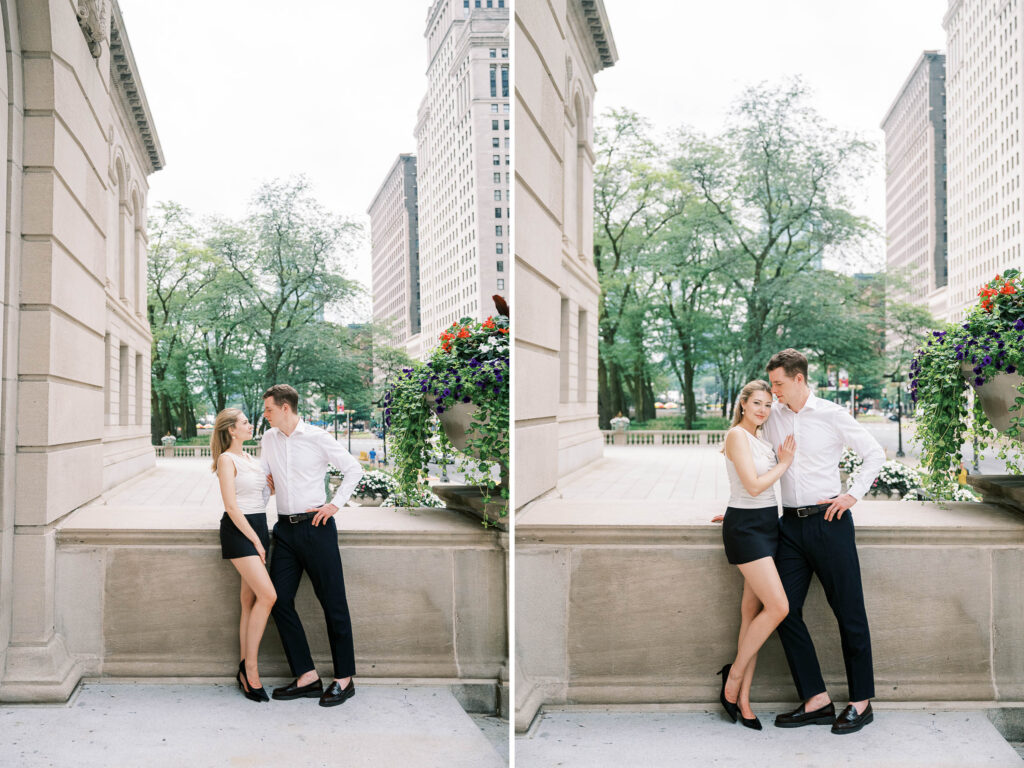
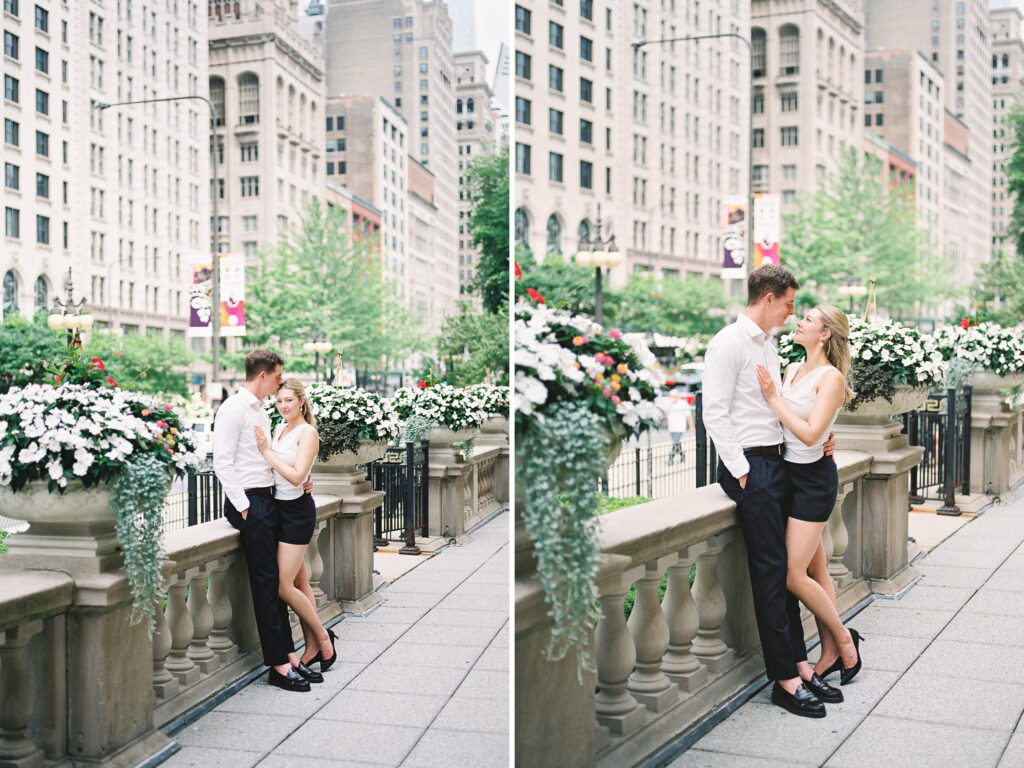
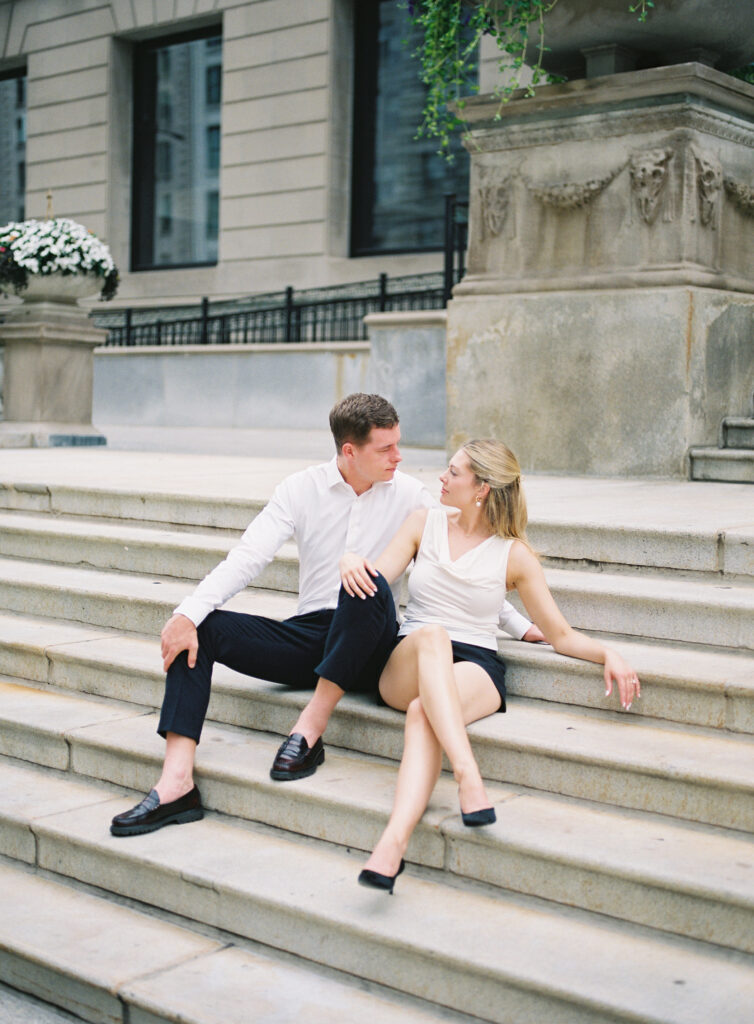
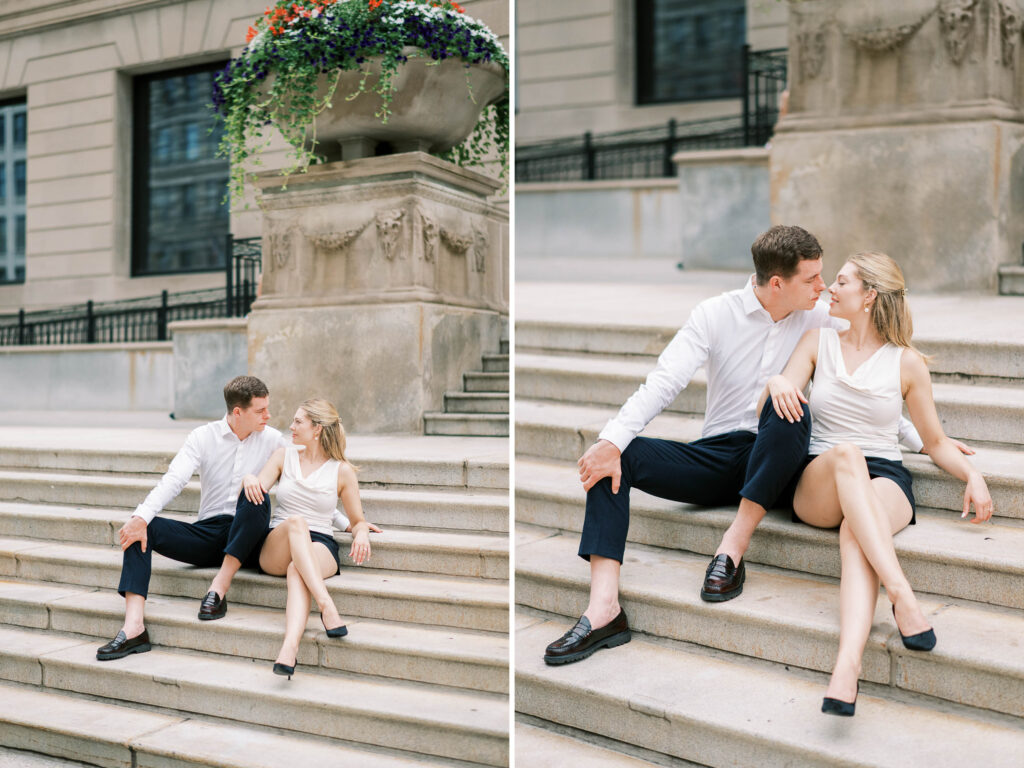
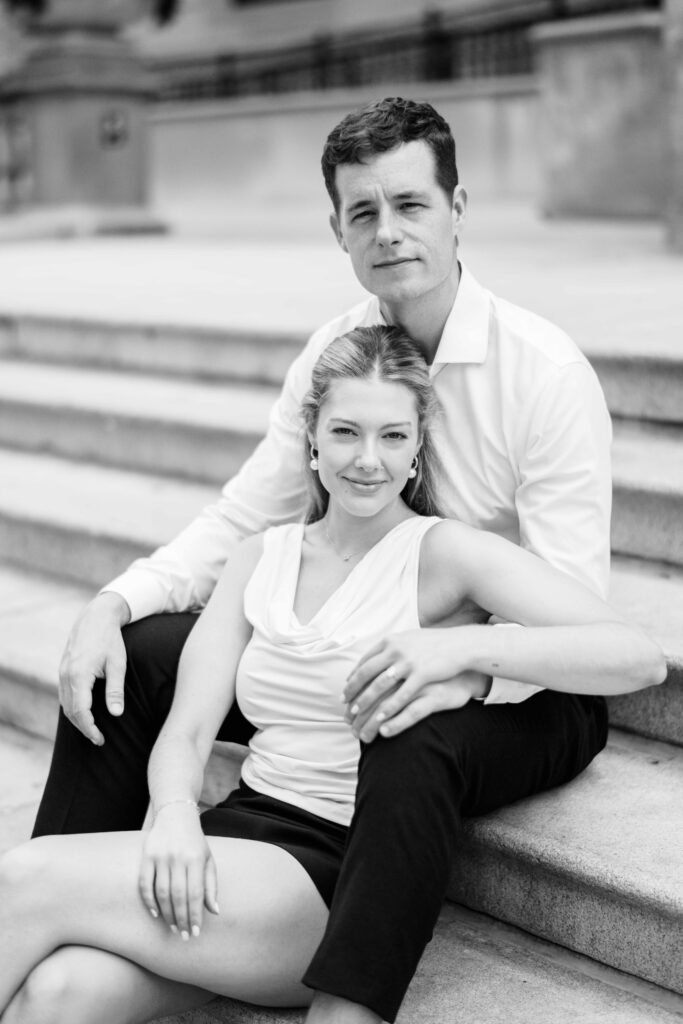
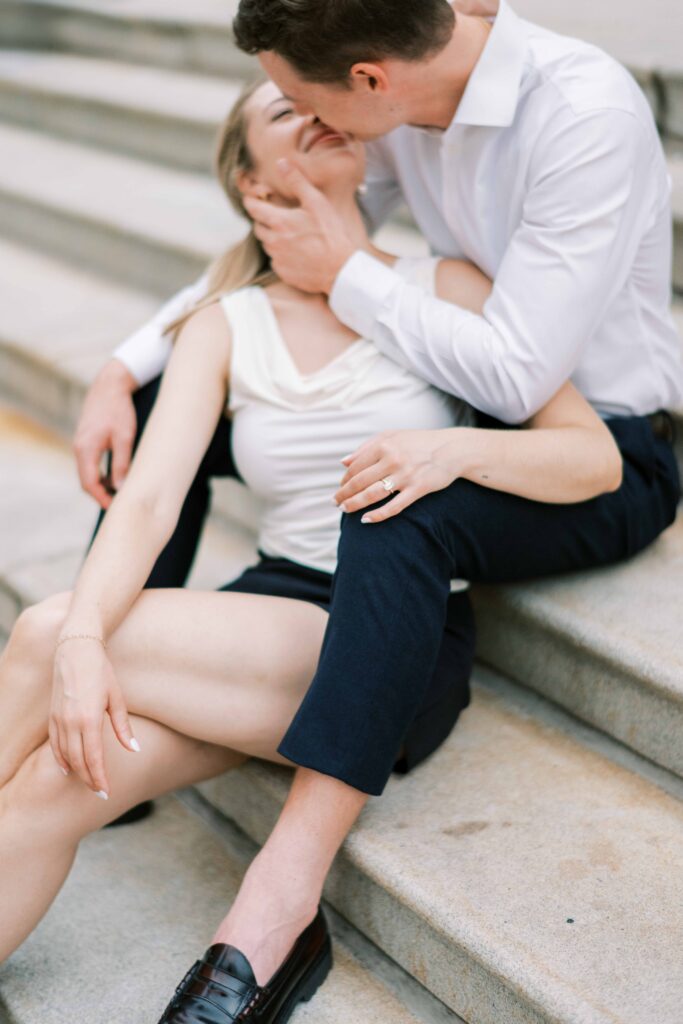
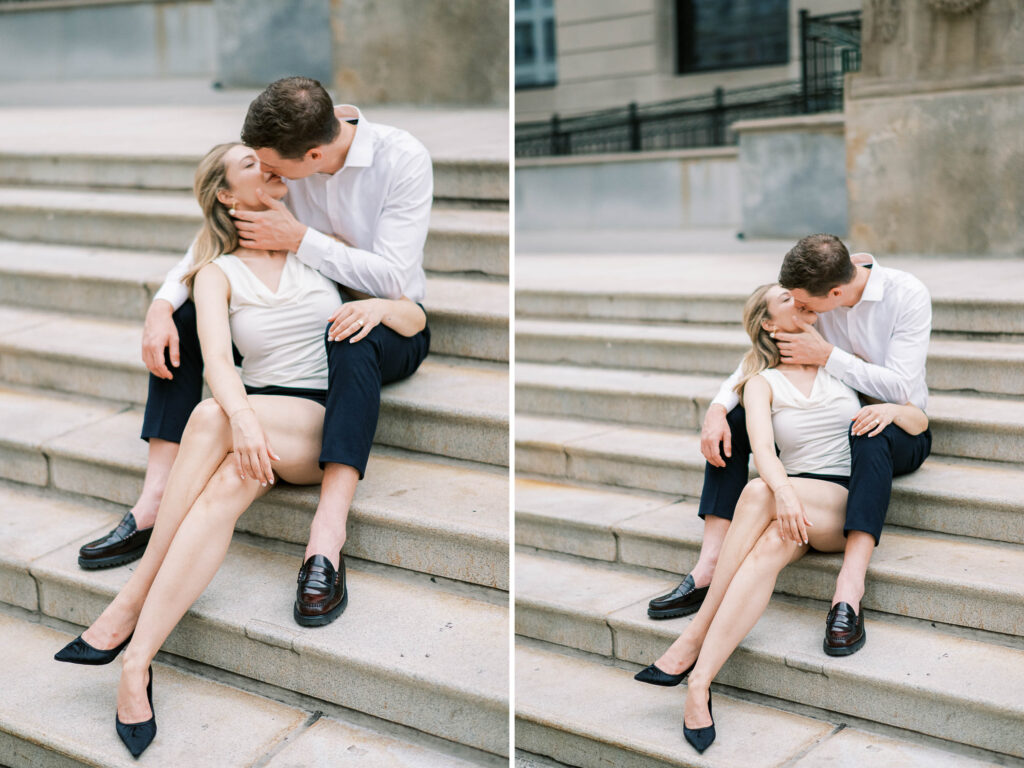
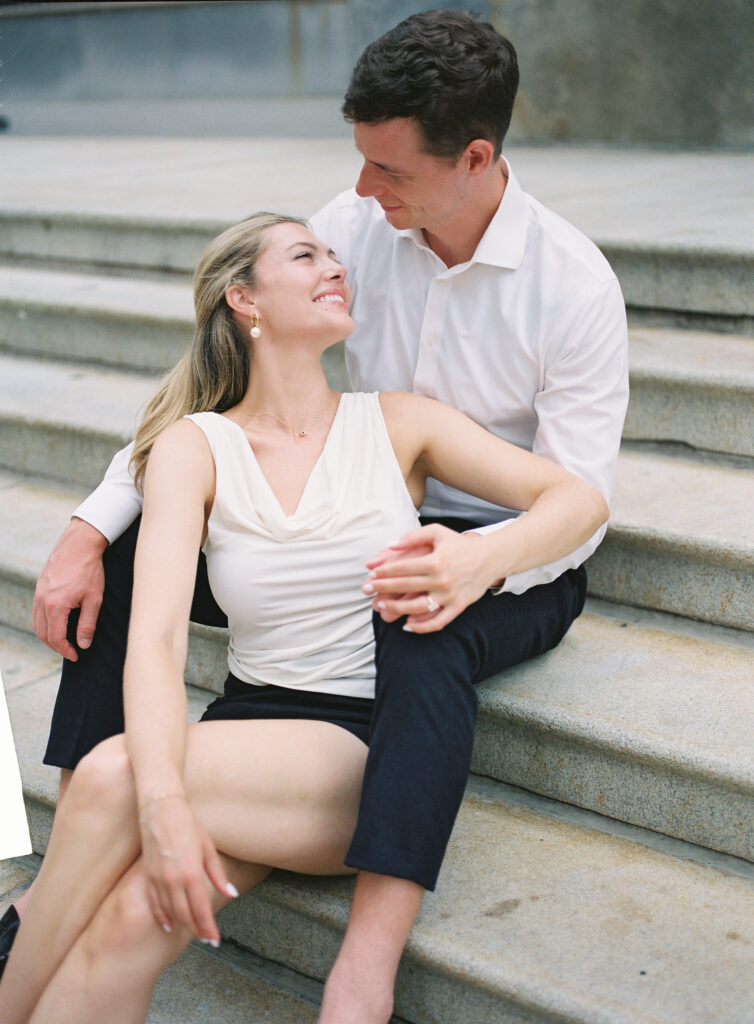
Nora and Austin brought warmth, ease, and style into a setting known for art and architecture. Their fashion-forward session balanced editorial direction with candid movement (one of my favorite approaches to engagement photography). The result felt refined, but authentic. Styled, but still human (a huge distinction in today’s AI-infused world). If you’re trying to achieve this look, I’ve got some tips and inspo to get you started.
Fine Art Engagement Photography in Chicago
But first, what is fine art photography? Fine art engagement photography begins with intention. Instead of moving from one pretty background to another, the session focuses on how light, composition, movement, and emotion work together. (i.e., it’s not just about a pretty aesthetic.)
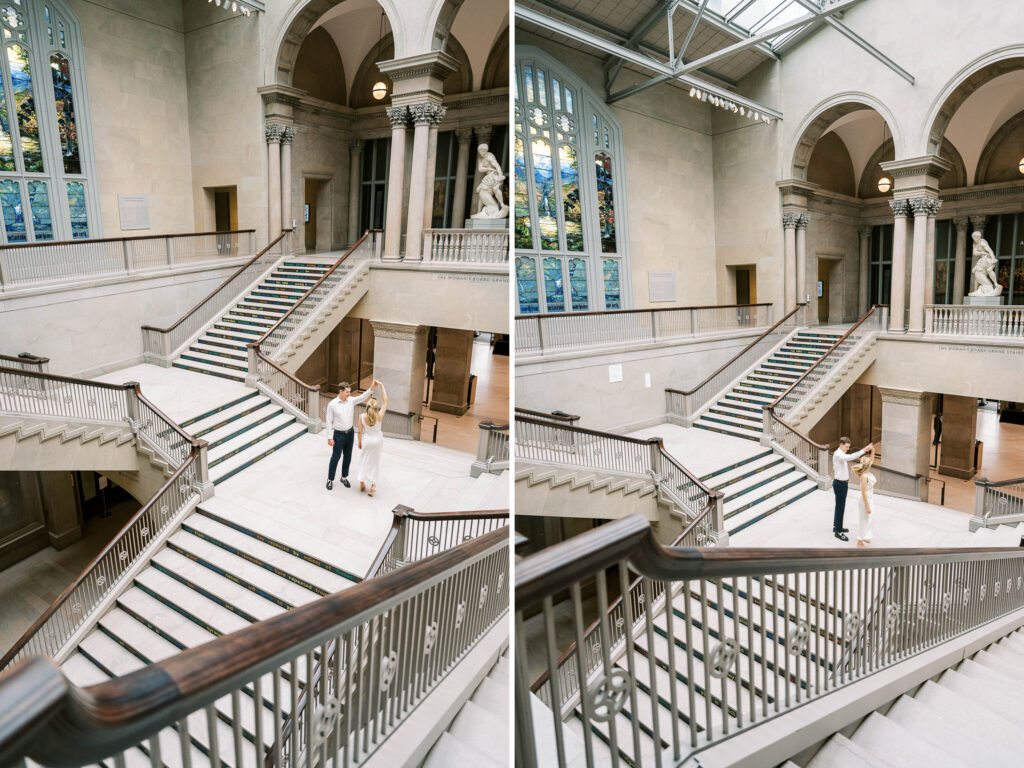
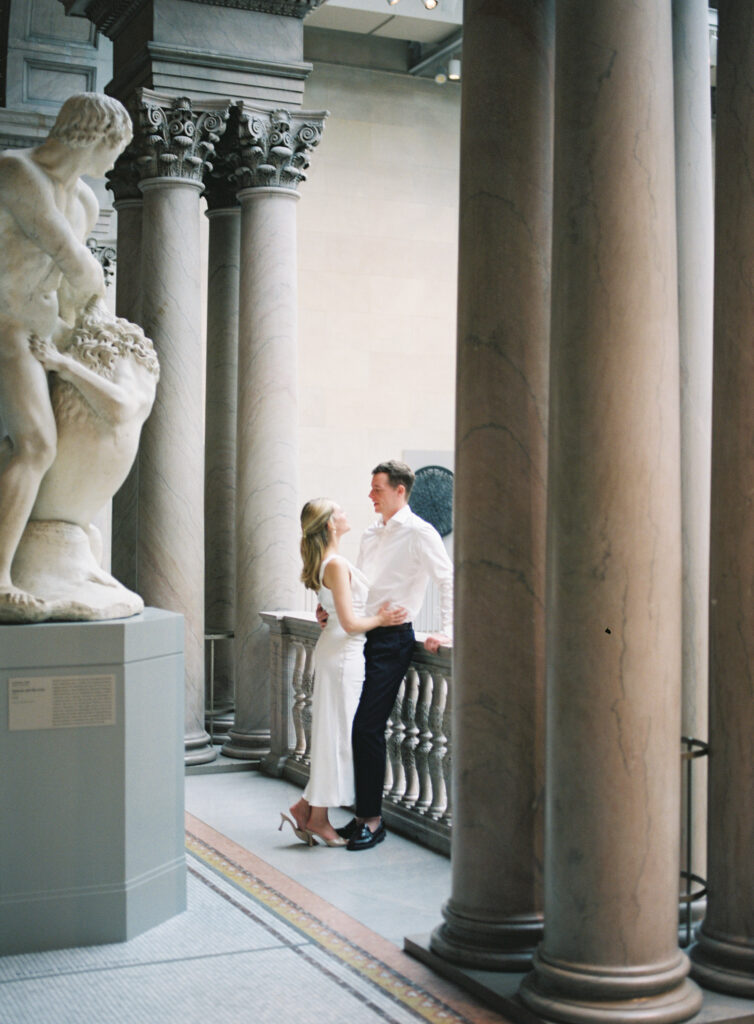
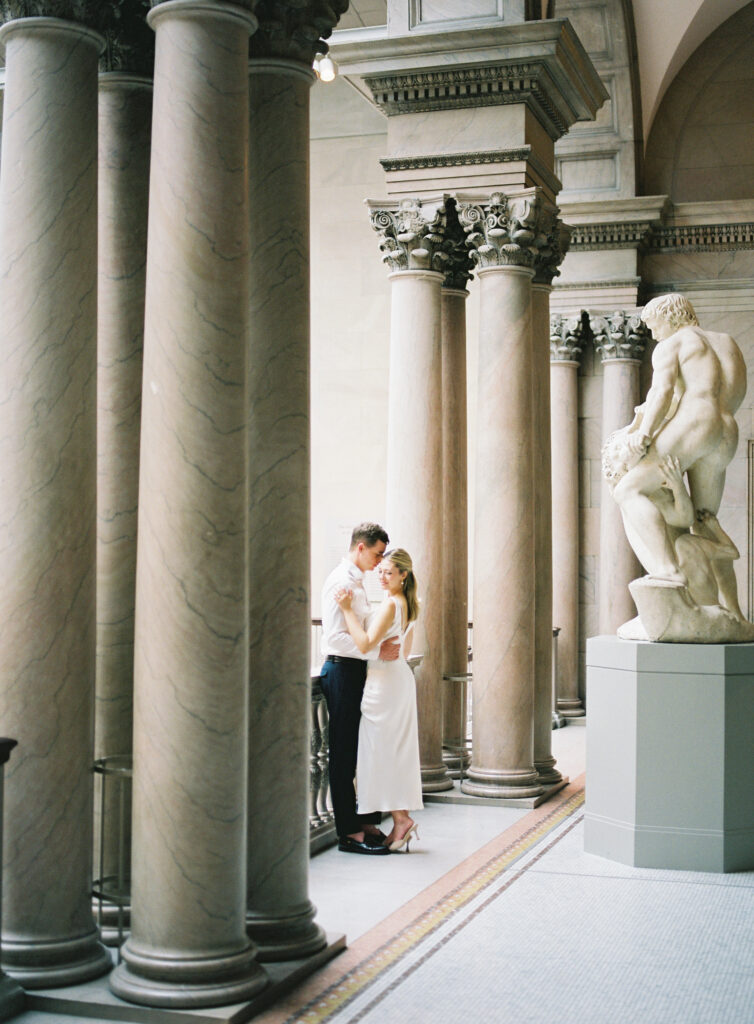
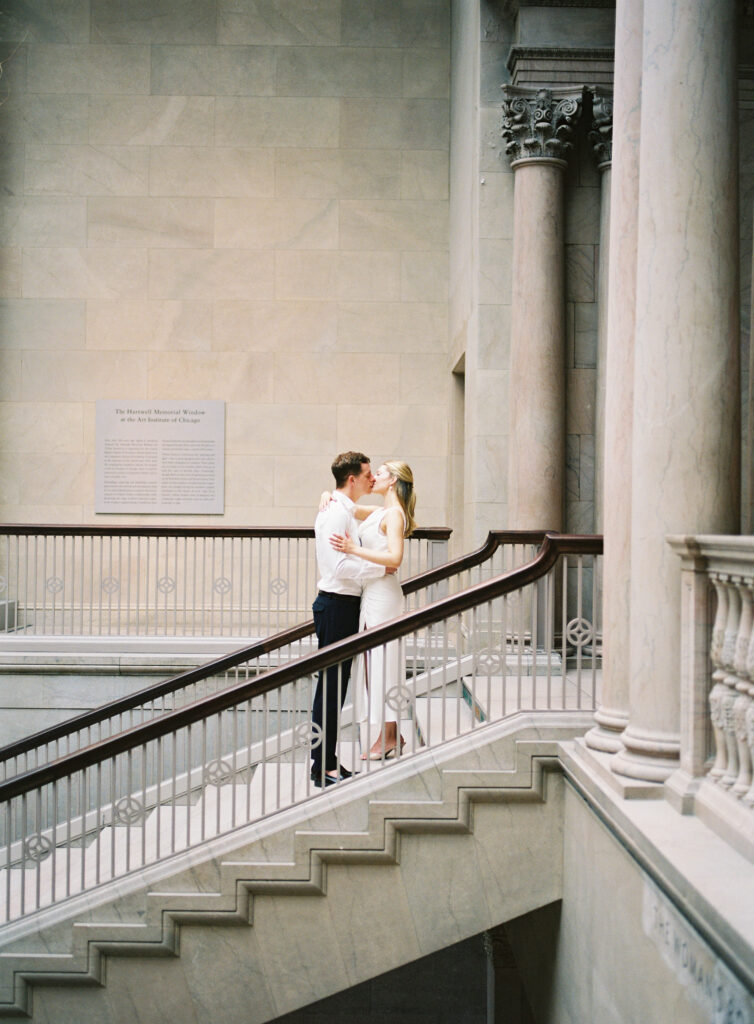
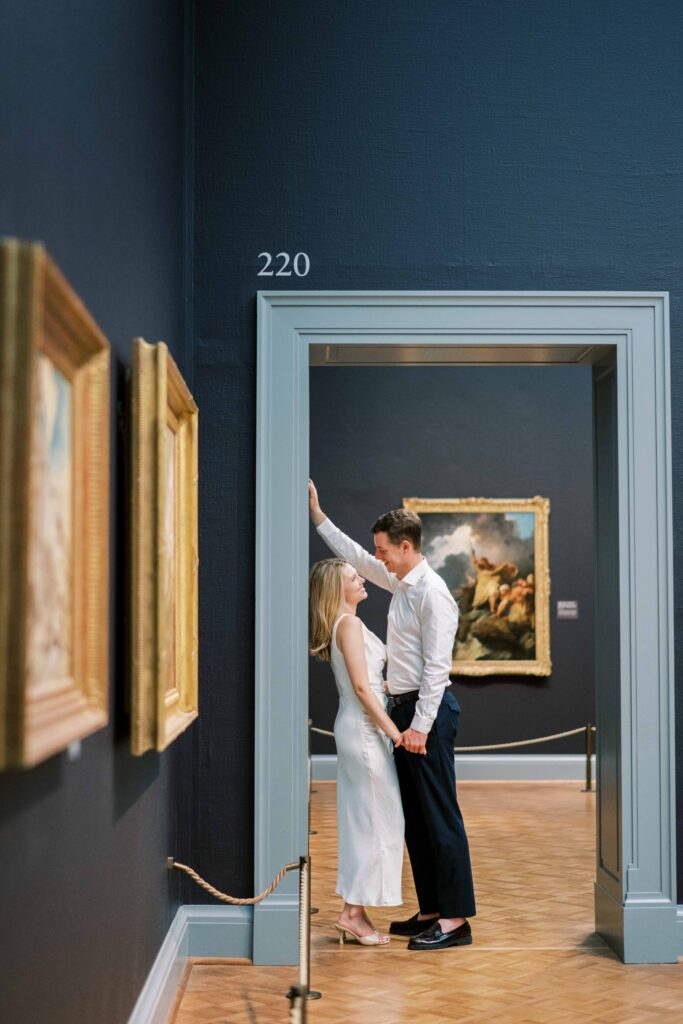
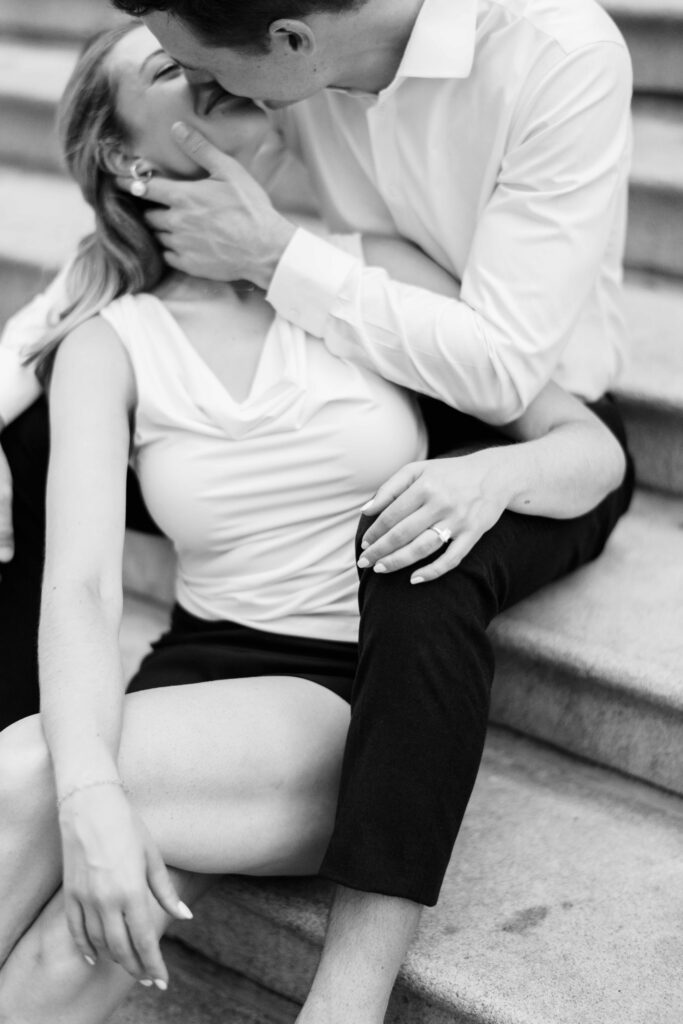
At the Art Institute, that approach feels especially natural. The museum setting encourages a slower, observant pace. Rather than filling every frame, we can use negative space, clean architecture, and strong lines to create images that breathe. A quiet hallway, a stone wall, a set of steps, or the edge of the garden can become part of the story without overpowering the couple.
That difference matters. Pretty portraits can be lovely, but photographs with artistic intention hold attention longer and mean more. They give the eye somewhere to travel and invite a second look. They allow the couple to feel connected to the setting rather than placed in front of it.
Instead of forcing every image to “feel dramatic,” we let many moments stay simple.
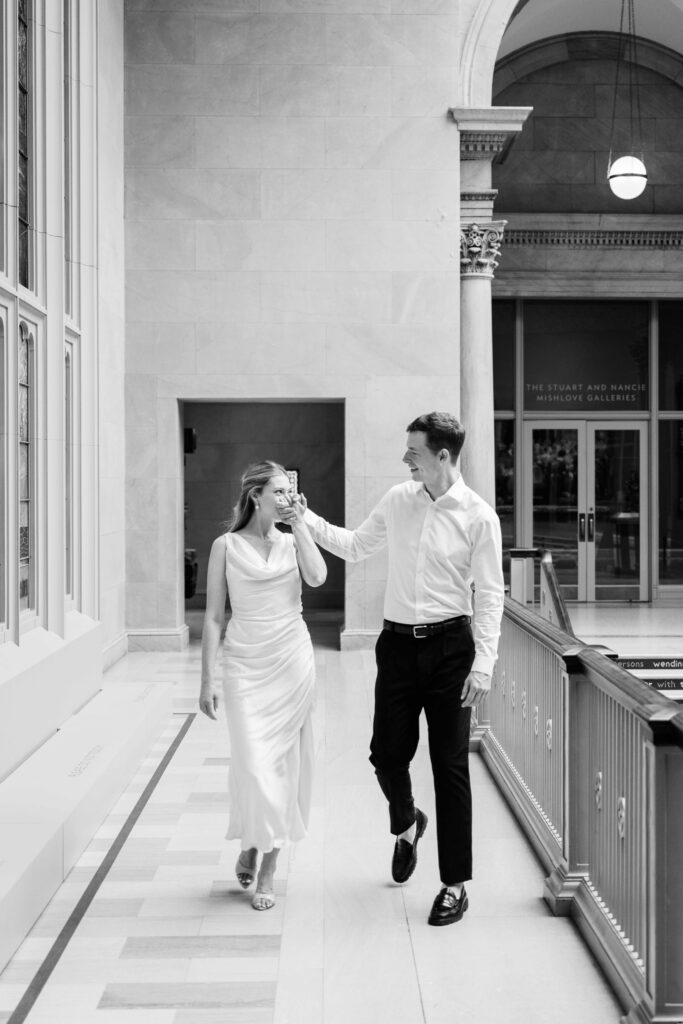
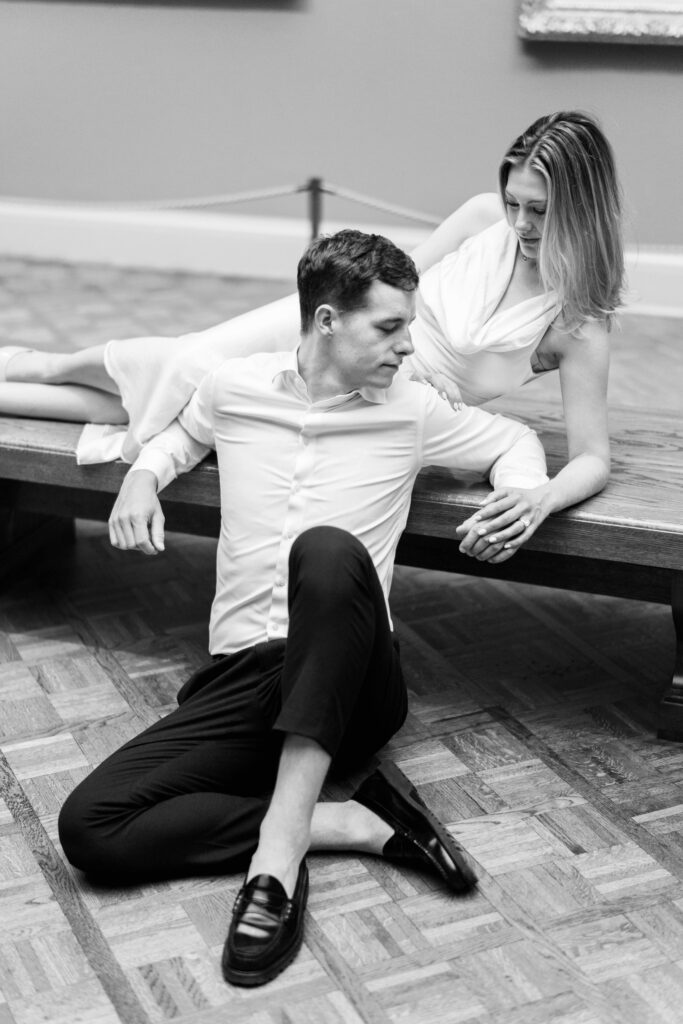
A hand resting lightly and a knowing glance. A quiet walk with shared laughter between frames. Or a pause before moving into the next pose. Those small transitions often become the images that feel most personal.
How to Take Editorial Engagement Photos that Look Like an Art Gallery
Many couples want engagement photos to feel elevated without looking overly posed. They want the artistic polish of editorial imagery, but they also want to recognize themselves in the photos.
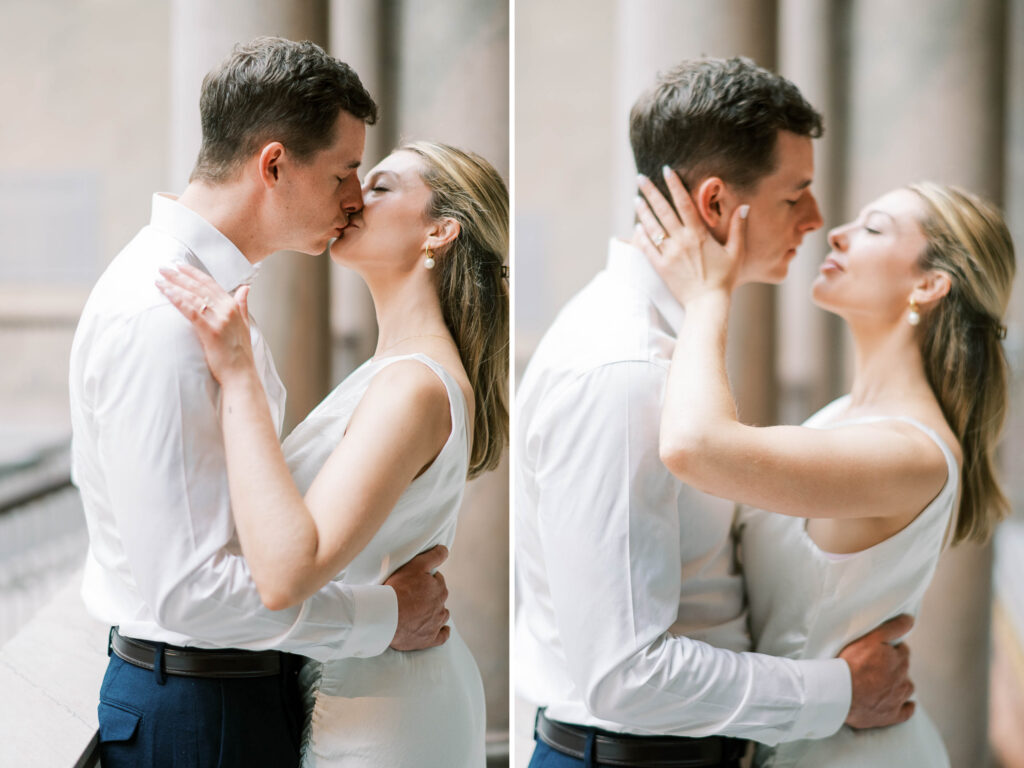
That balance has become one of the strongest directions in modern engagement photography. Candid and documentary-inspired images bring honesty. Editorial composition brings structure. Together, they create photographs that feel both styled and emotionally real.
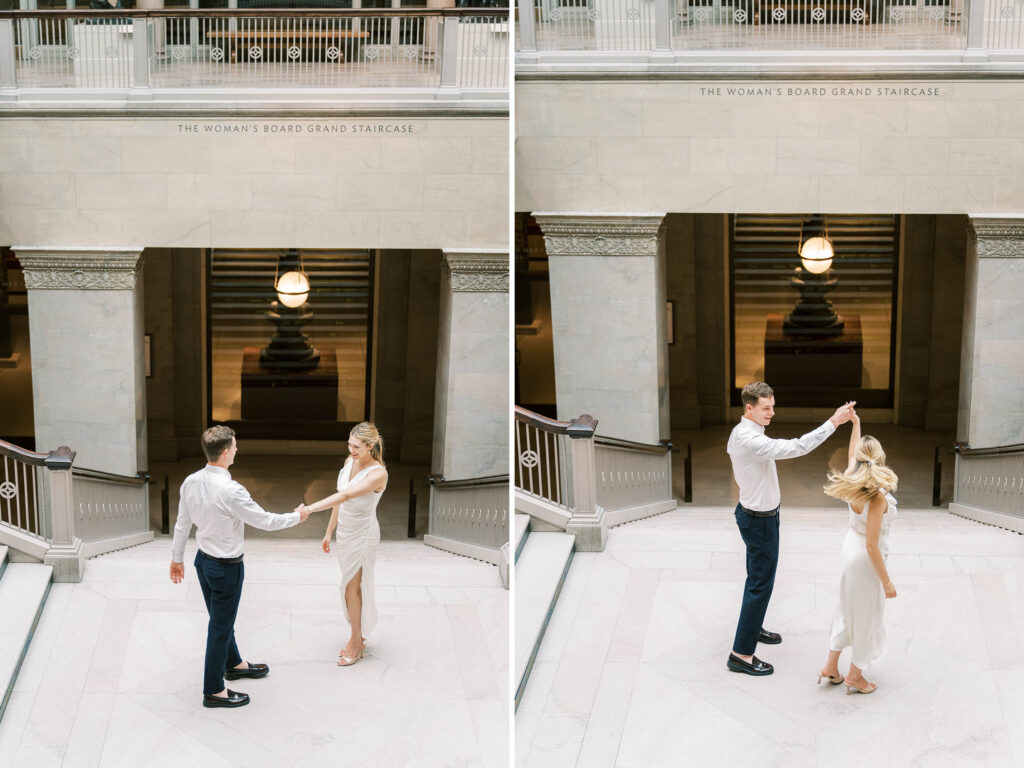
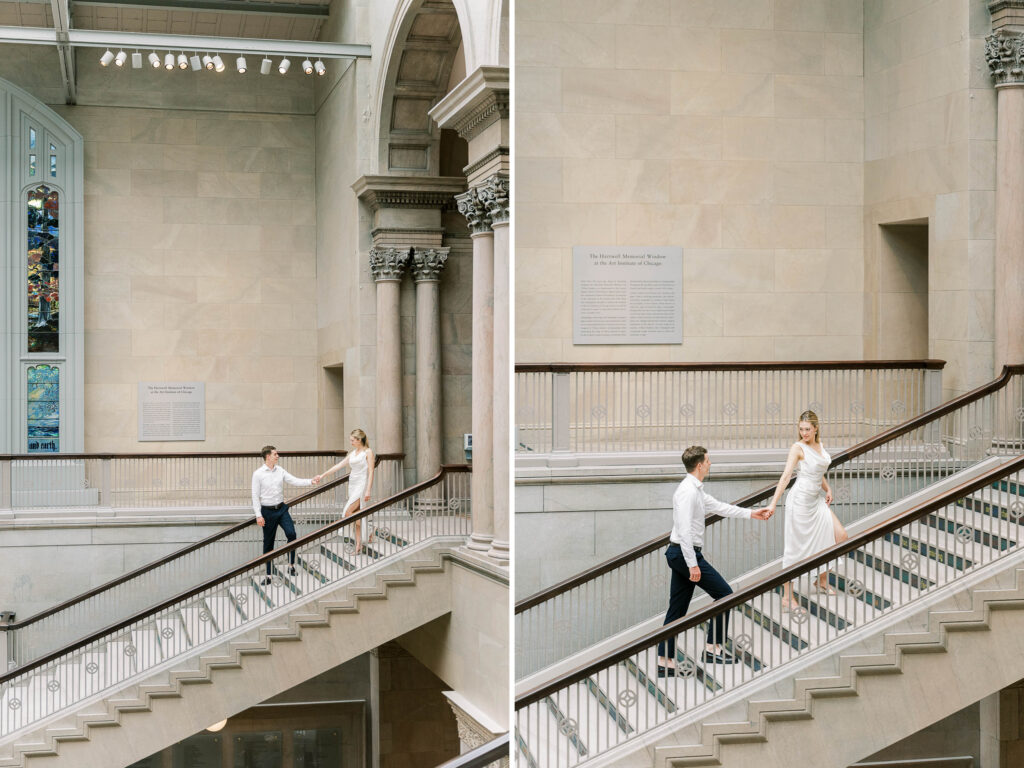
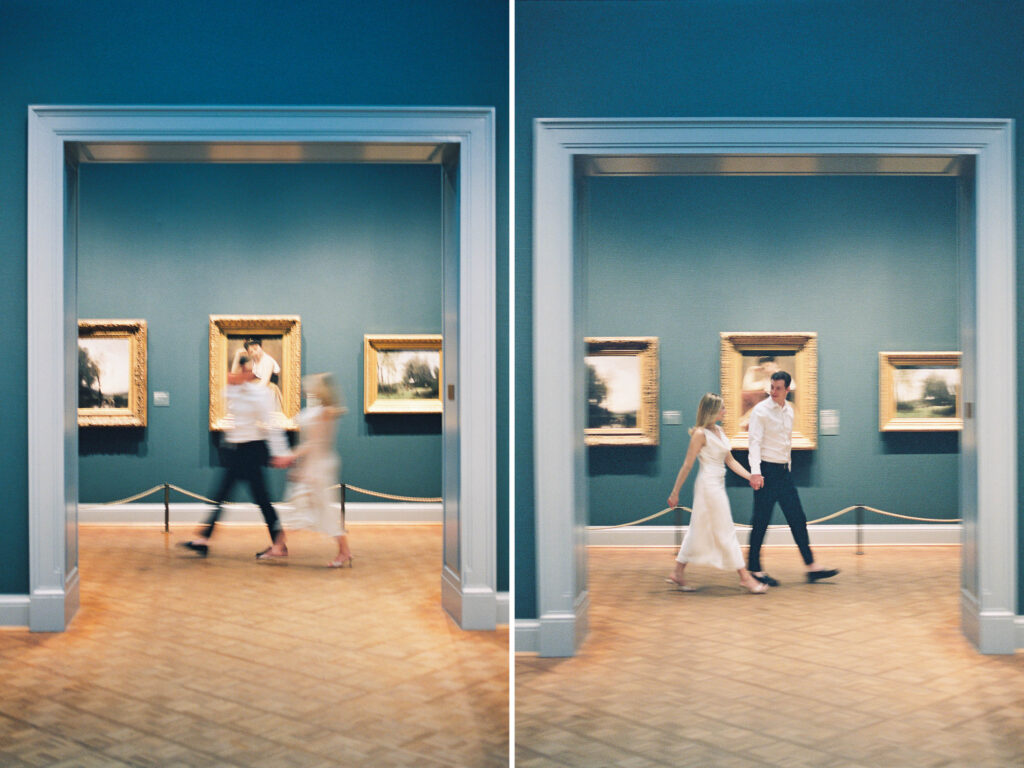
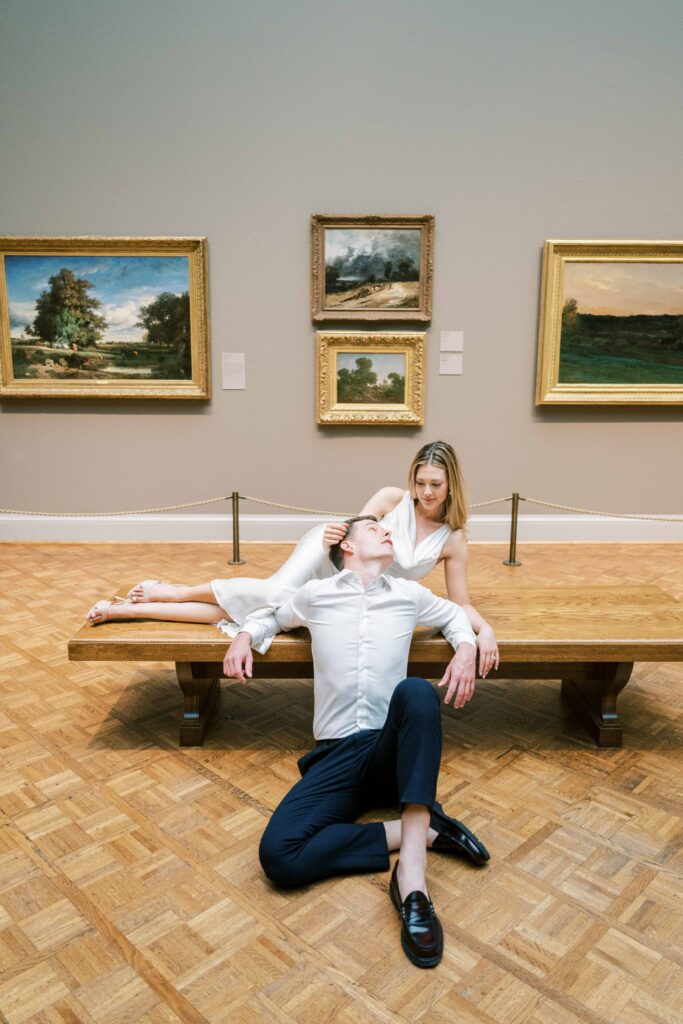
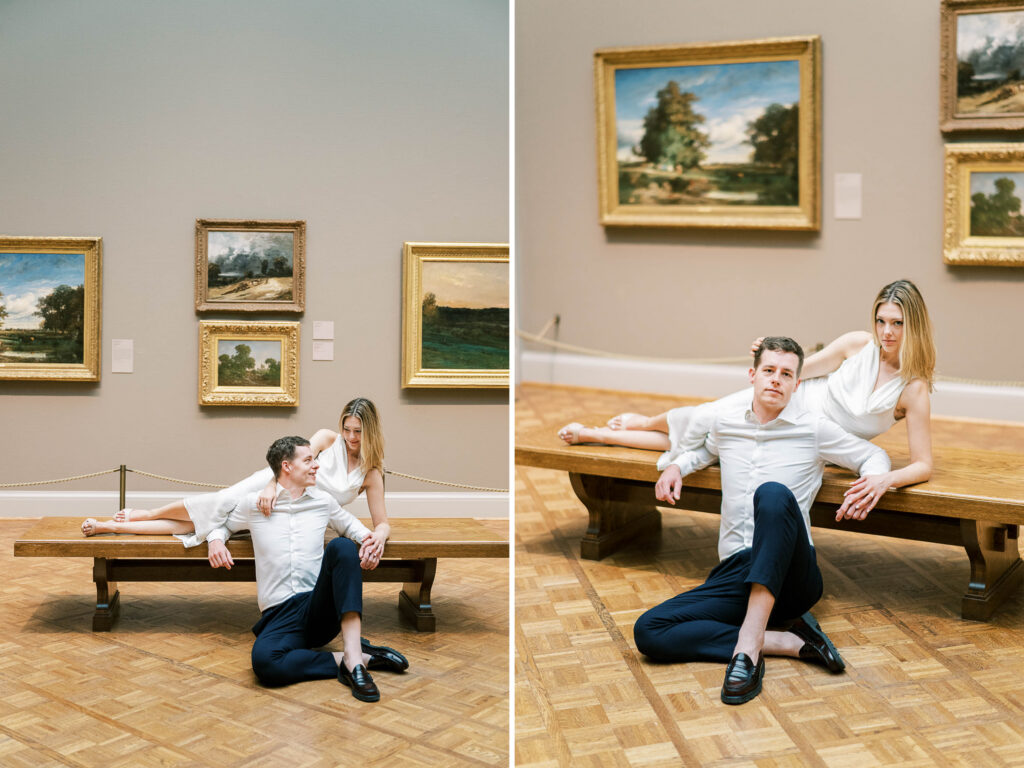
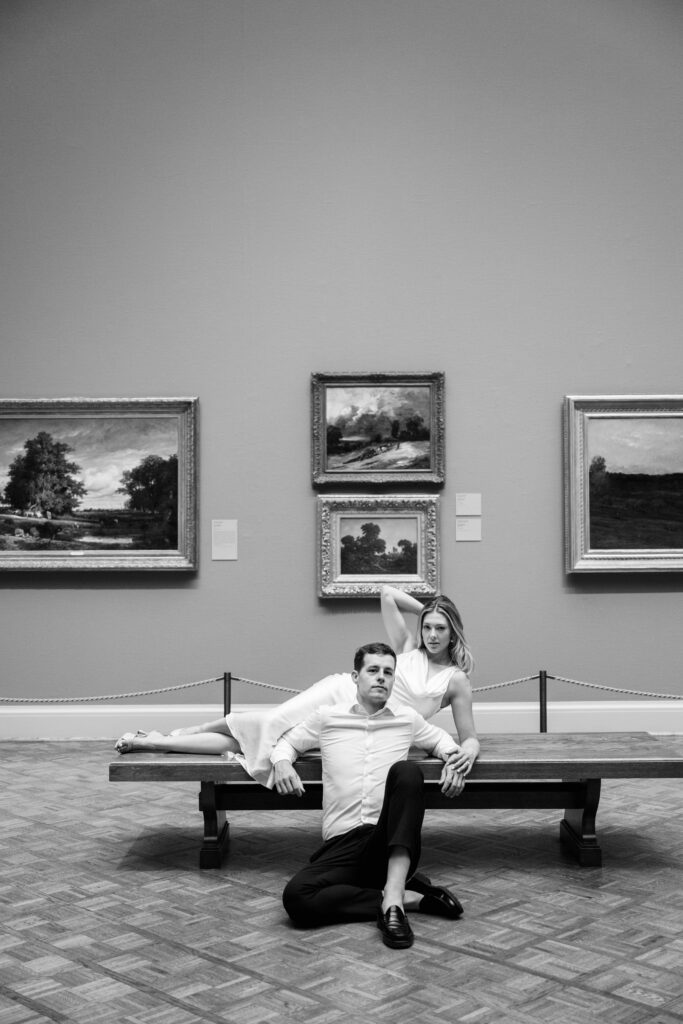
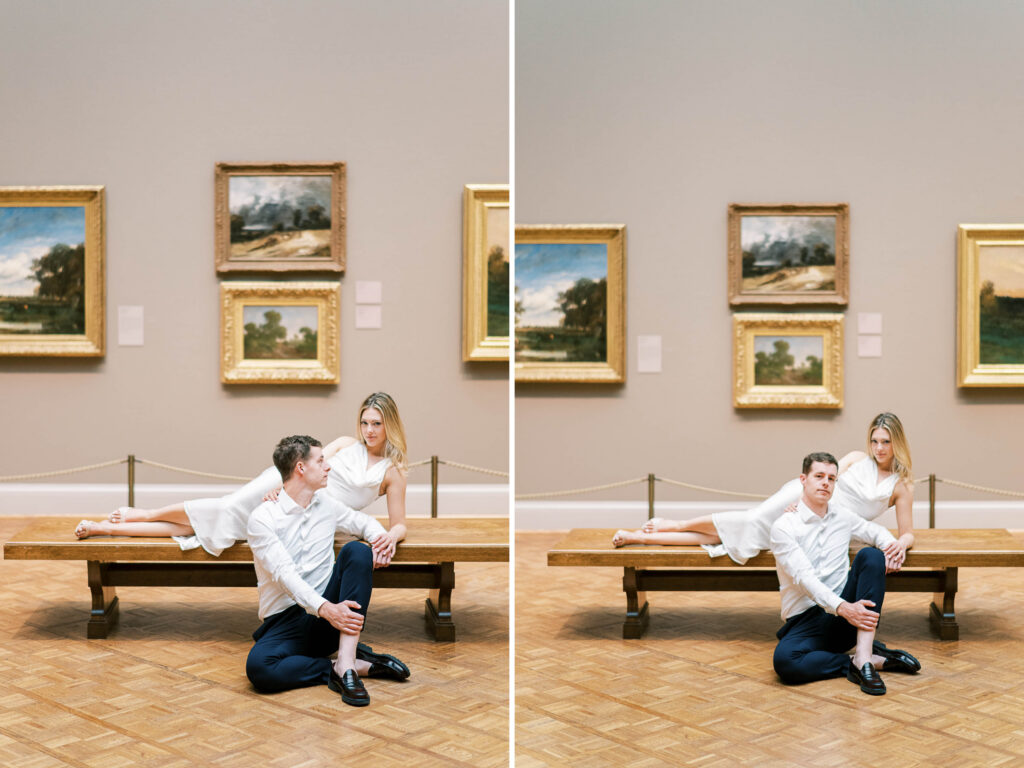
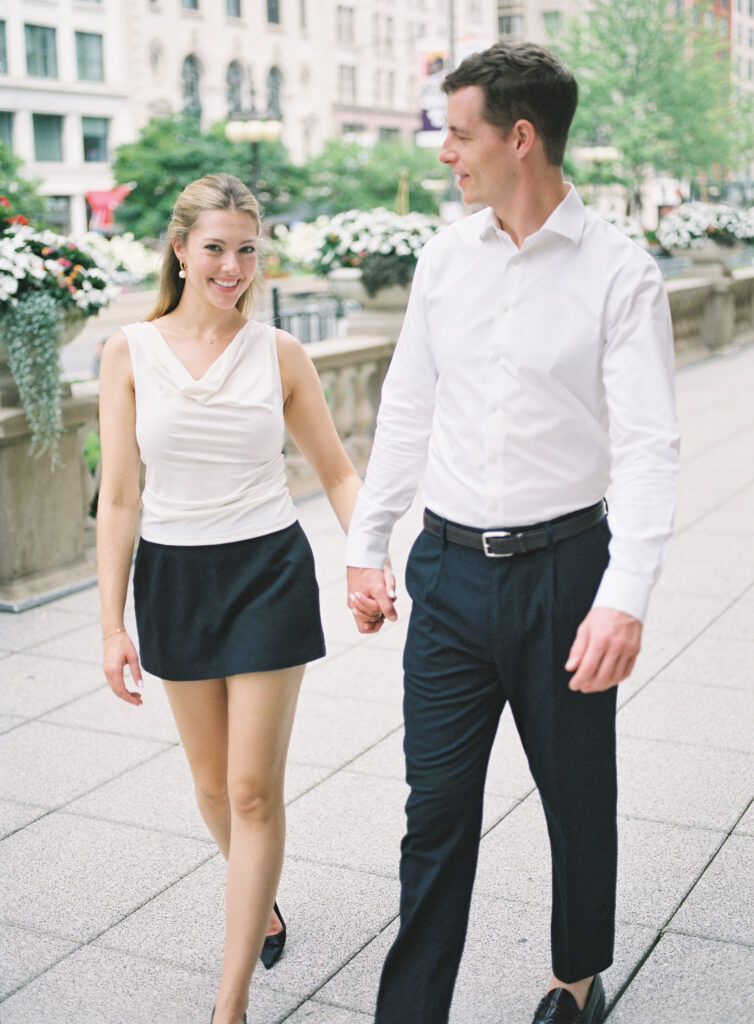
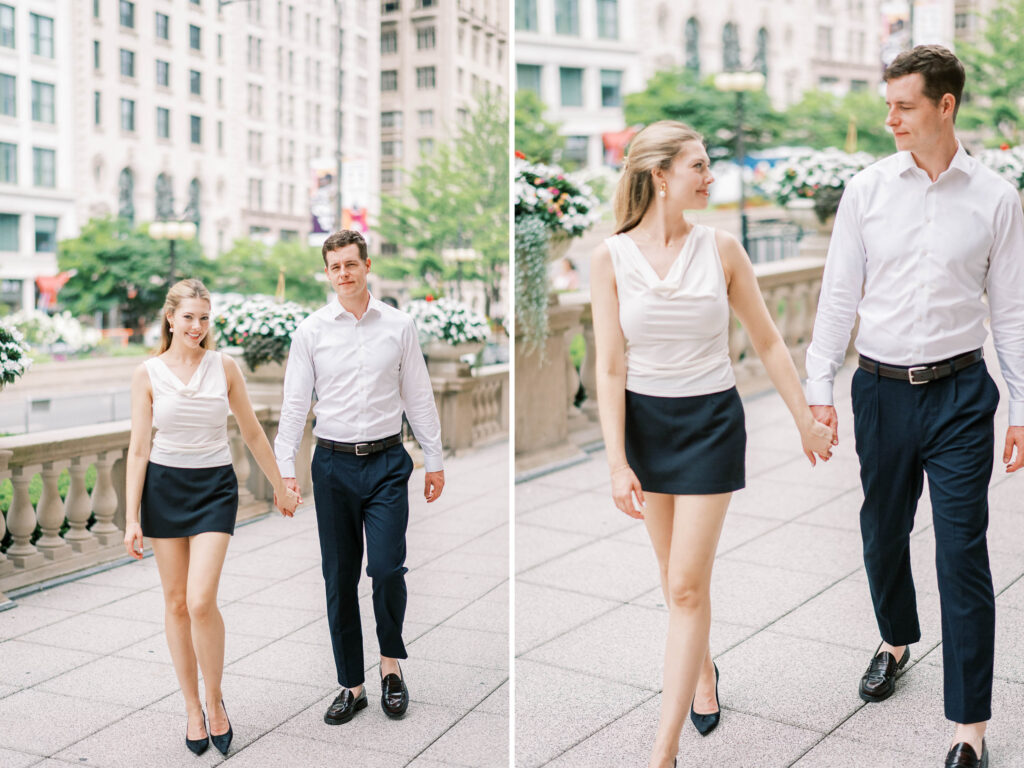
During Nora and Austin’s session, we moved between gentle direction and natural interaction. I might guide a couple into good light, place them near strong architecture, or adjust the angle of a frame. From there, movement takes over. Walking, turning, leaning in, laughing, looking away, or settling into a quiet moment helps the image feel alive. Even resting on a bench becomes captivating.
This approach works especially well in a public museum setting. Couples do not need to perform or overthink every gesture. Instead, they can move through the space together while I photograph the moments that unfold in between.
Creating Editorial Engagement Images That Feel Like a Gallery
For gallery-inspired engagement photos, some of the strongest fine art images often come from restraint.
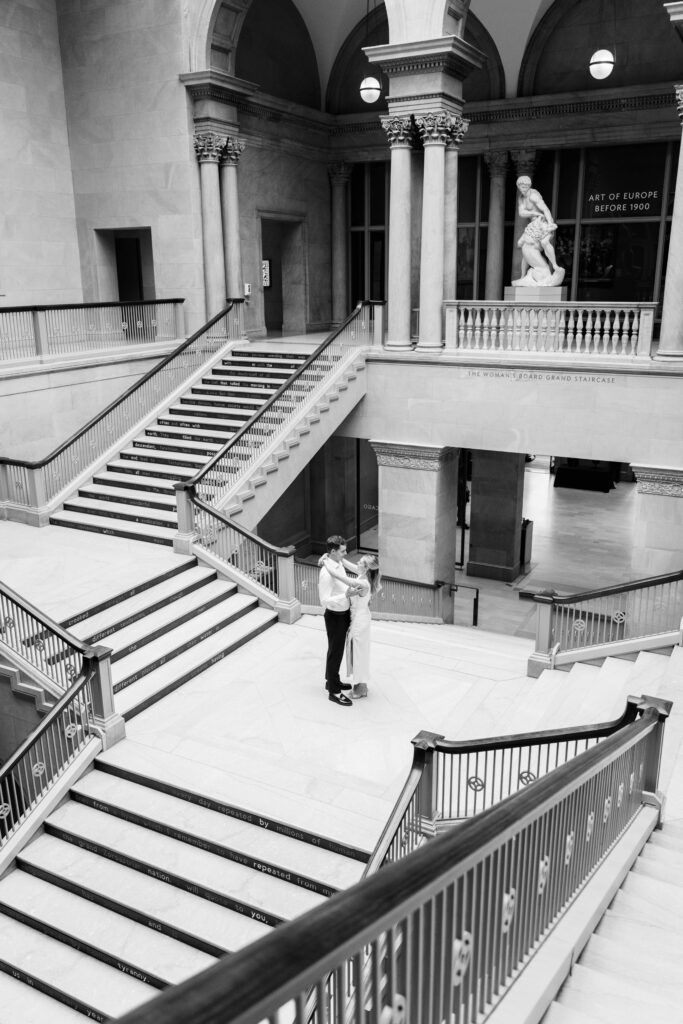
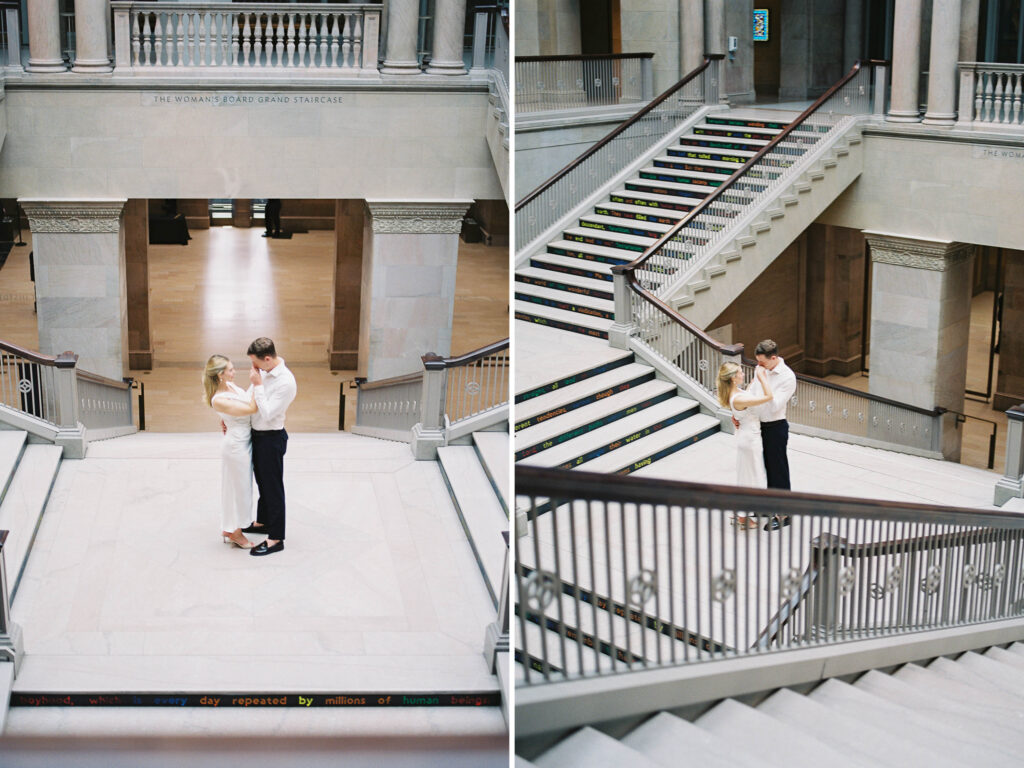
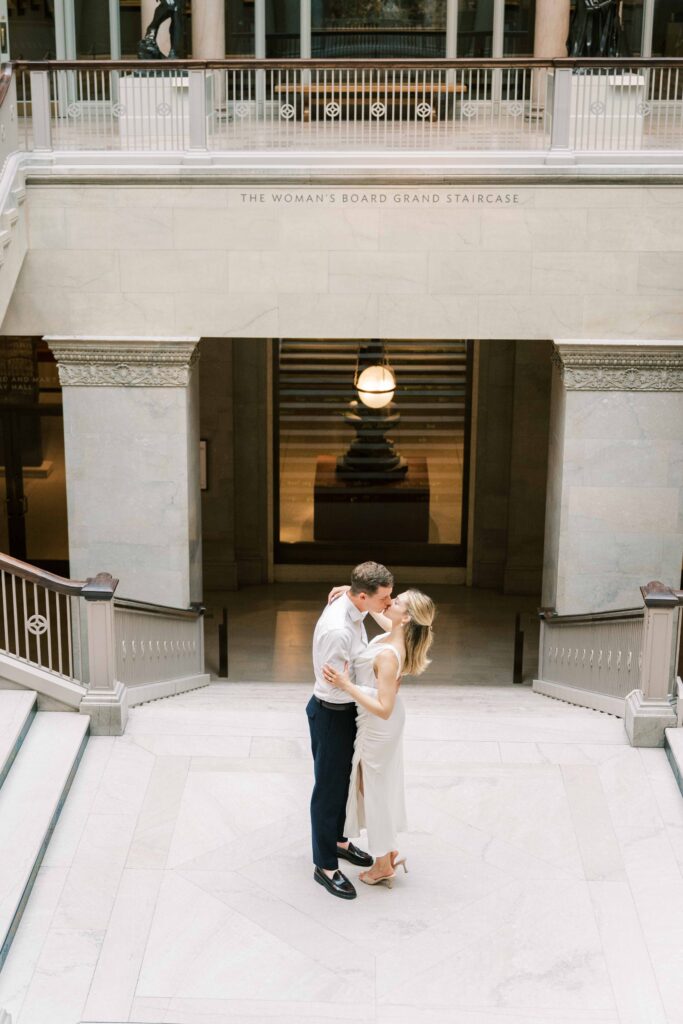
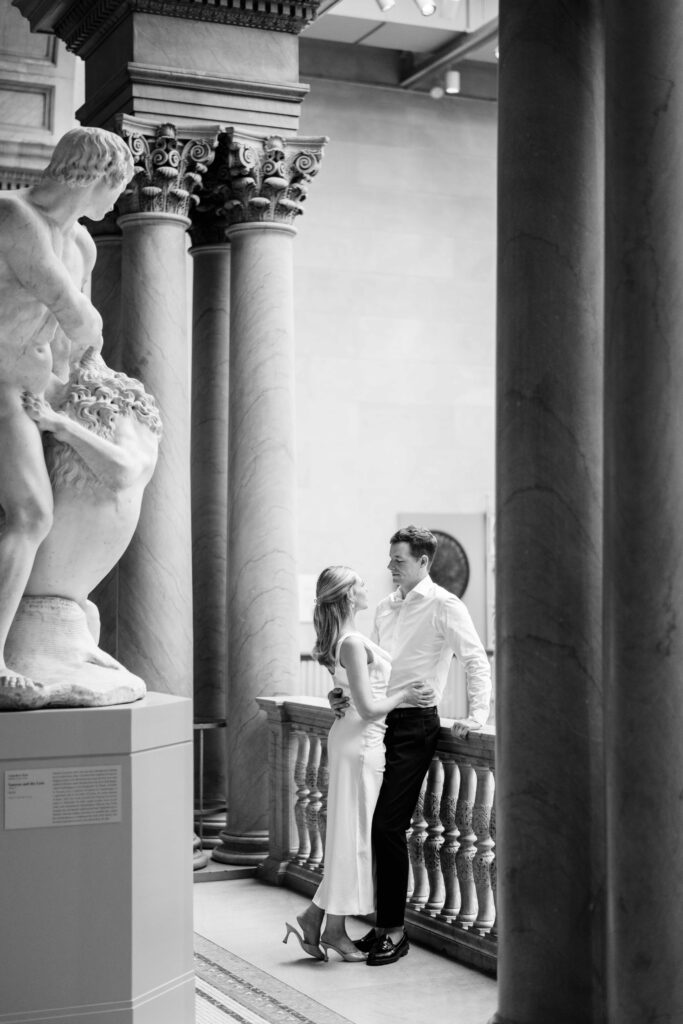
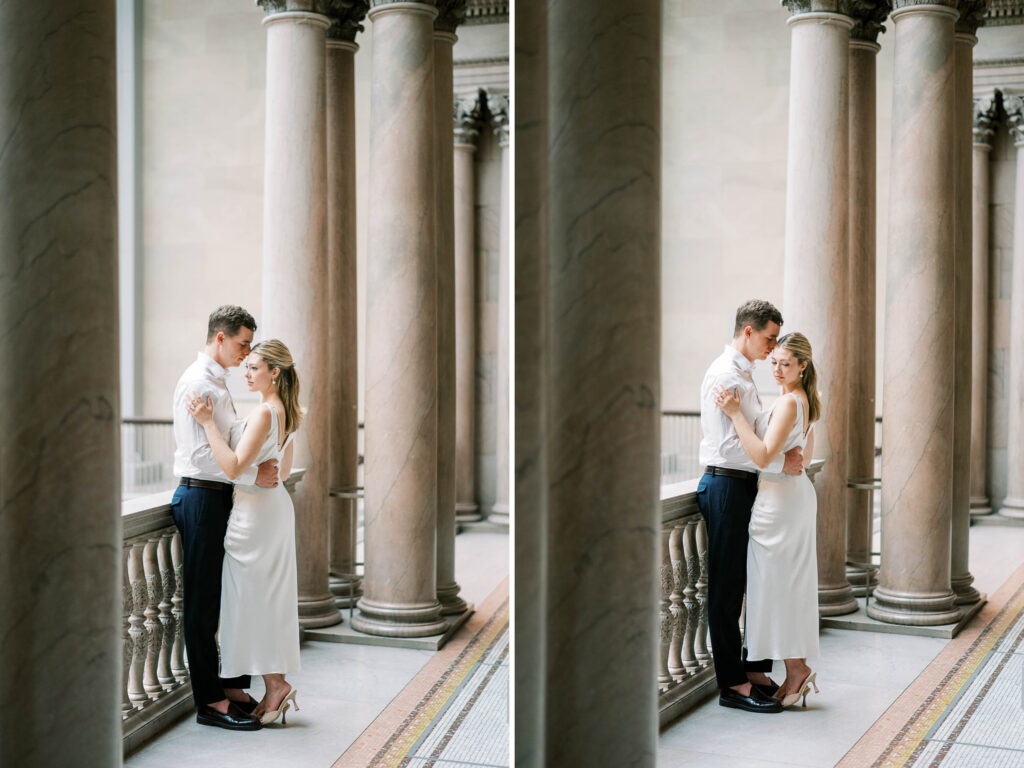
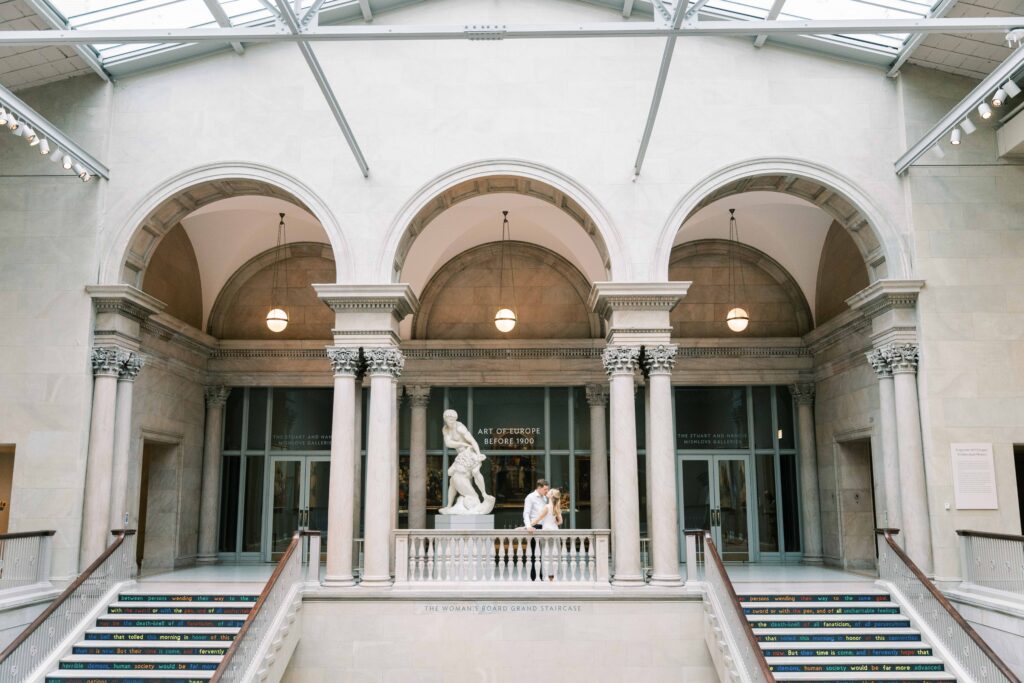
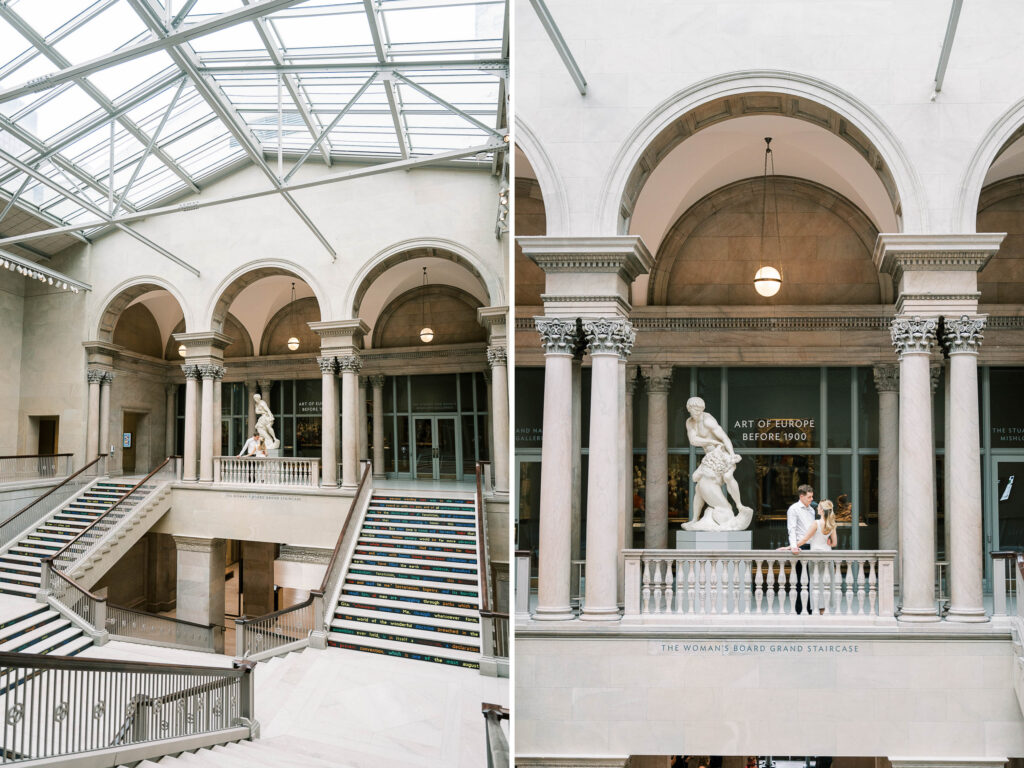
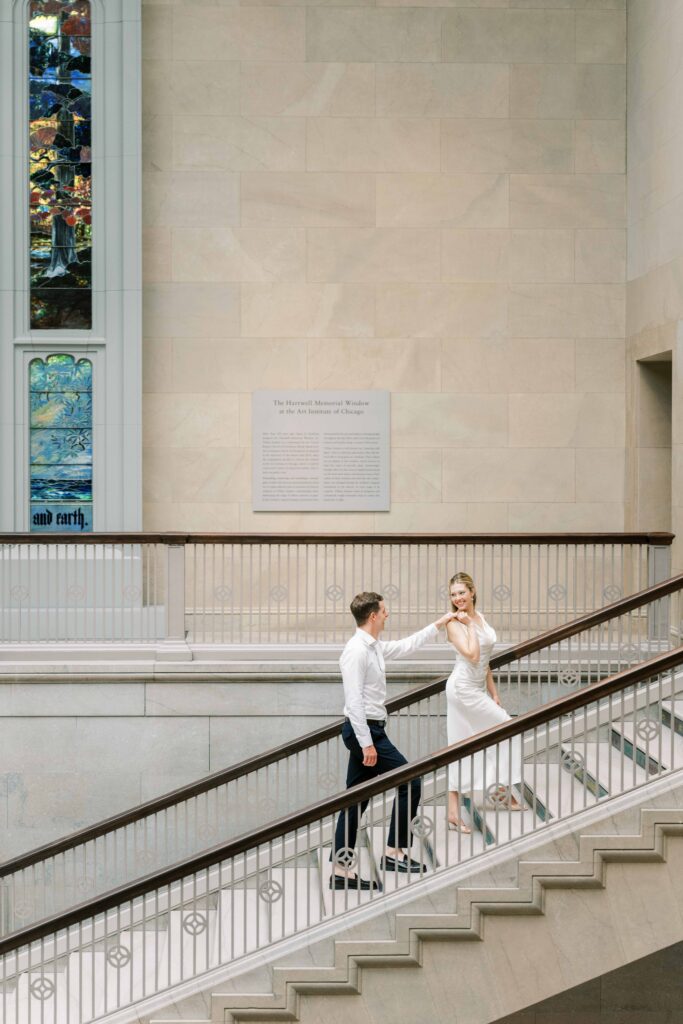
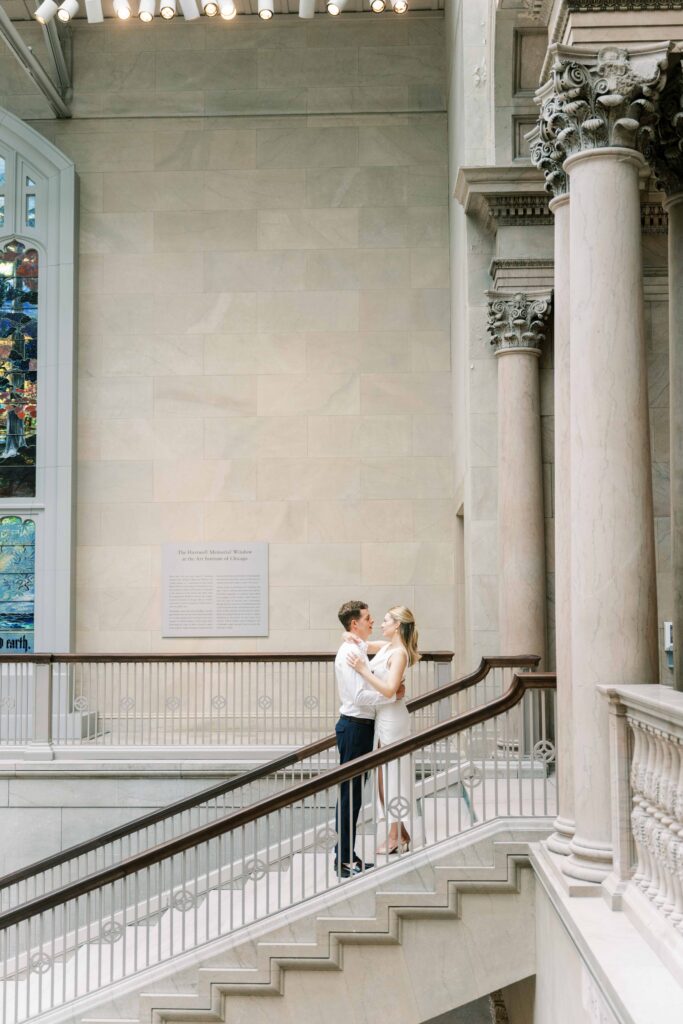
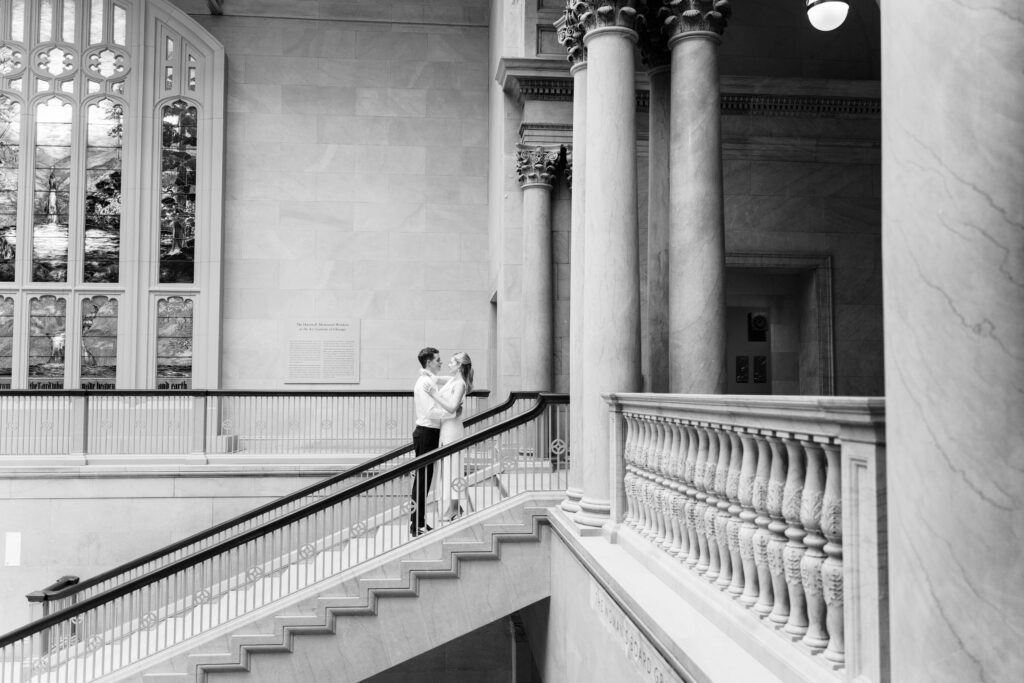
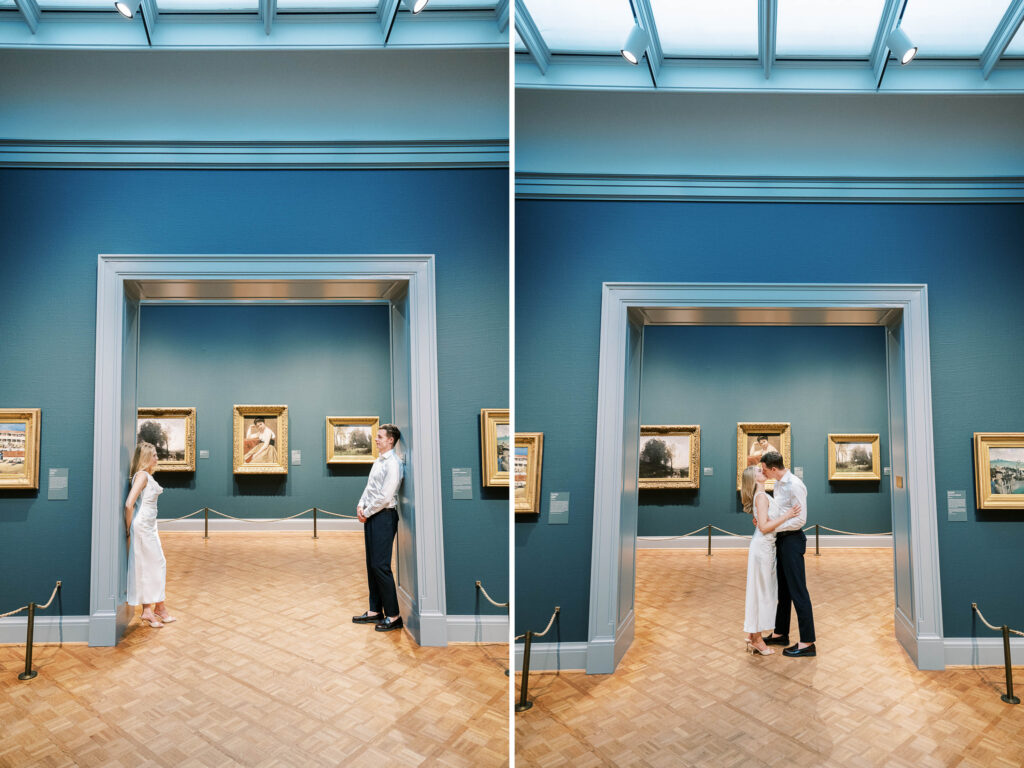
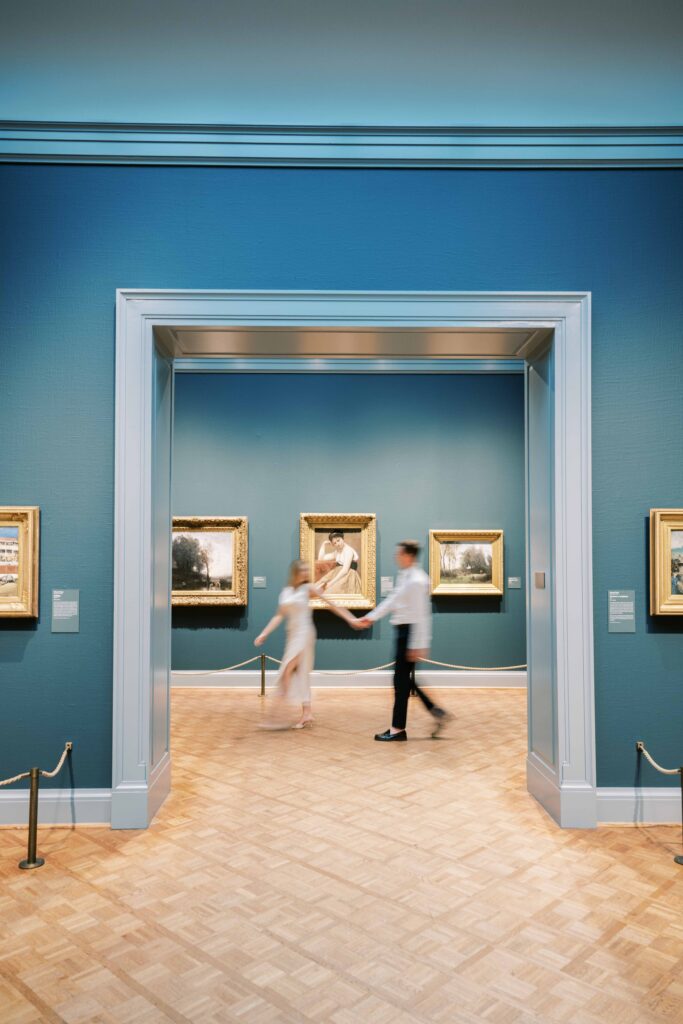
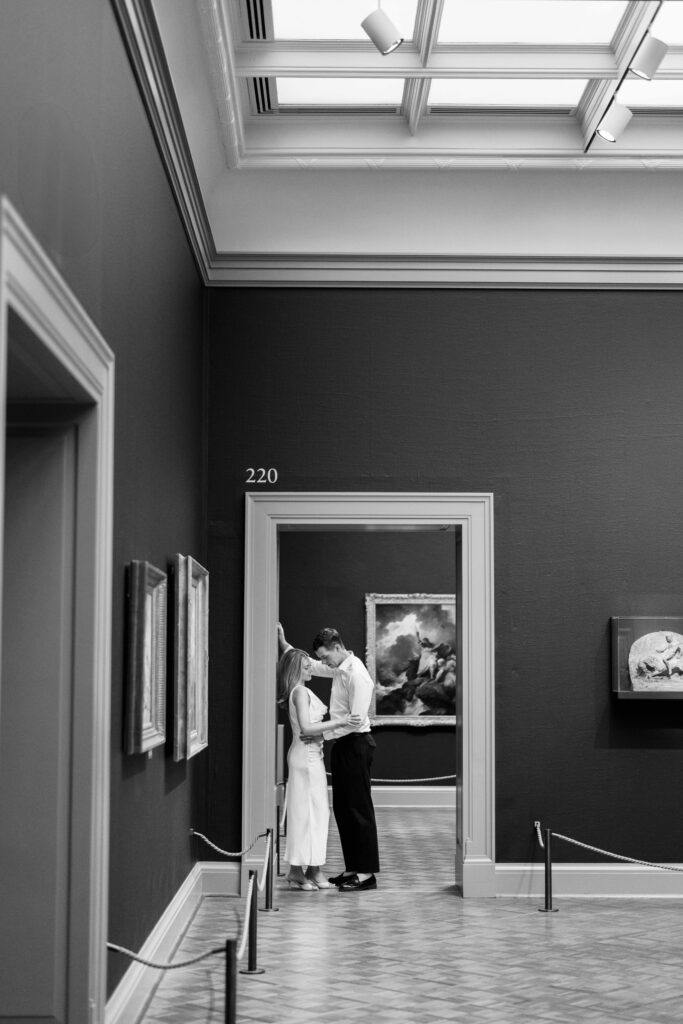
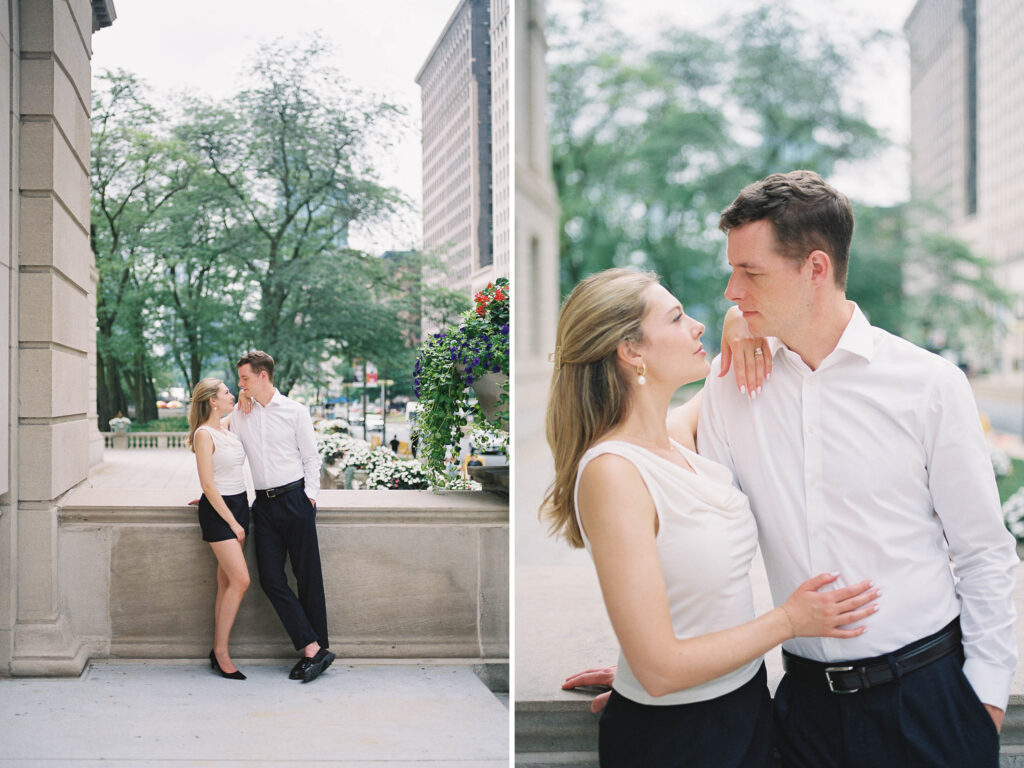
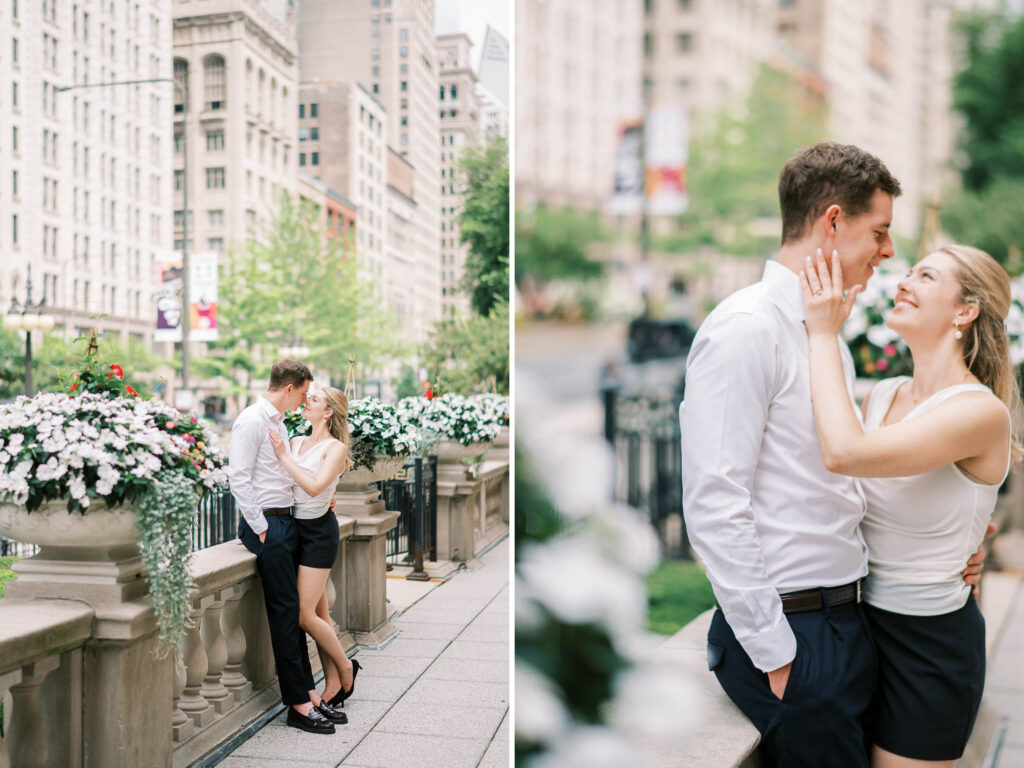
Composition plays a large role. At the Art Institute, I love using architecture as a life-sized frame. Doorways, columns, staircases, sculpture gardens, and clean walls can add balance and depth. Then, some negative space brings focus to the couple’s connection.
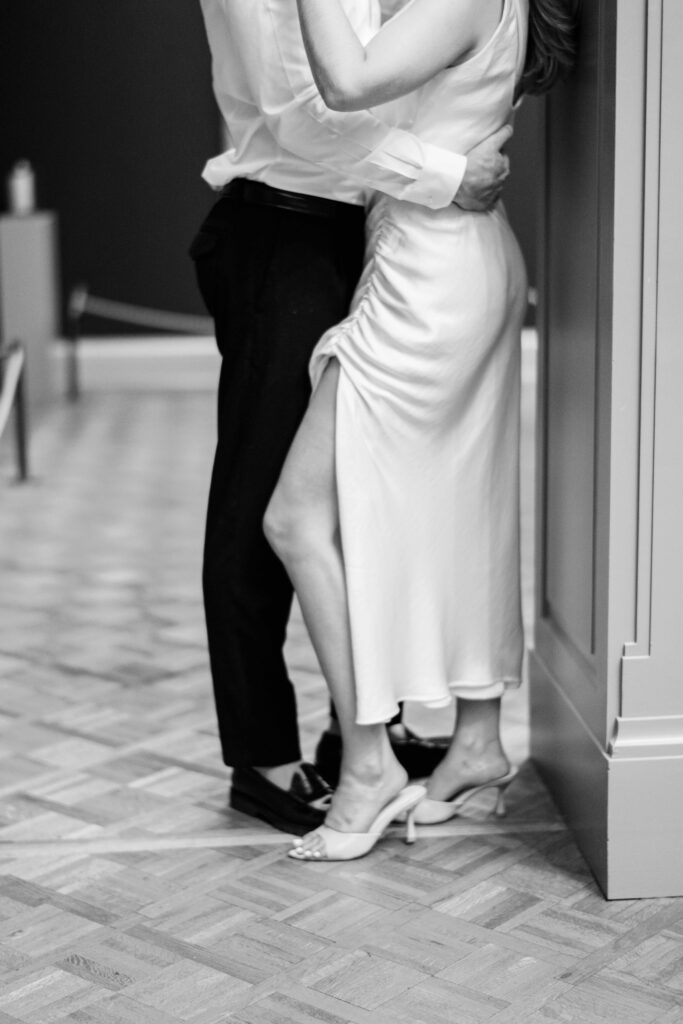
Movement adds another layer. A dress shifting while walking, hair catching the breeze, hands brushing together, or a couple turning toward each other can soften an architectural setting. Movement keeps the session from feeling frozen. It brings energy into a composed image.
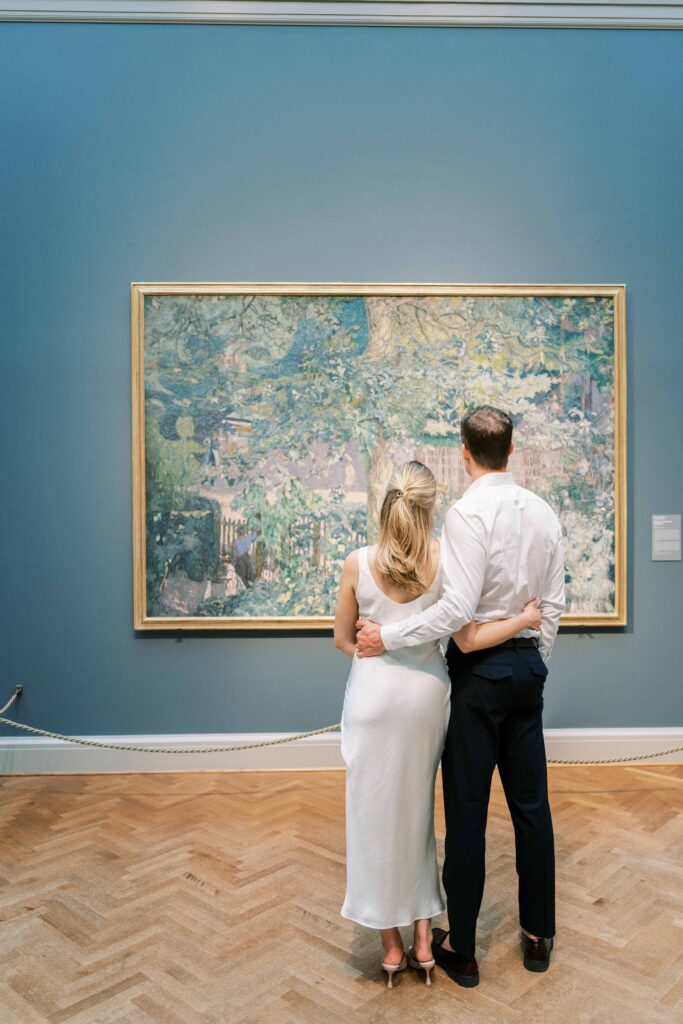
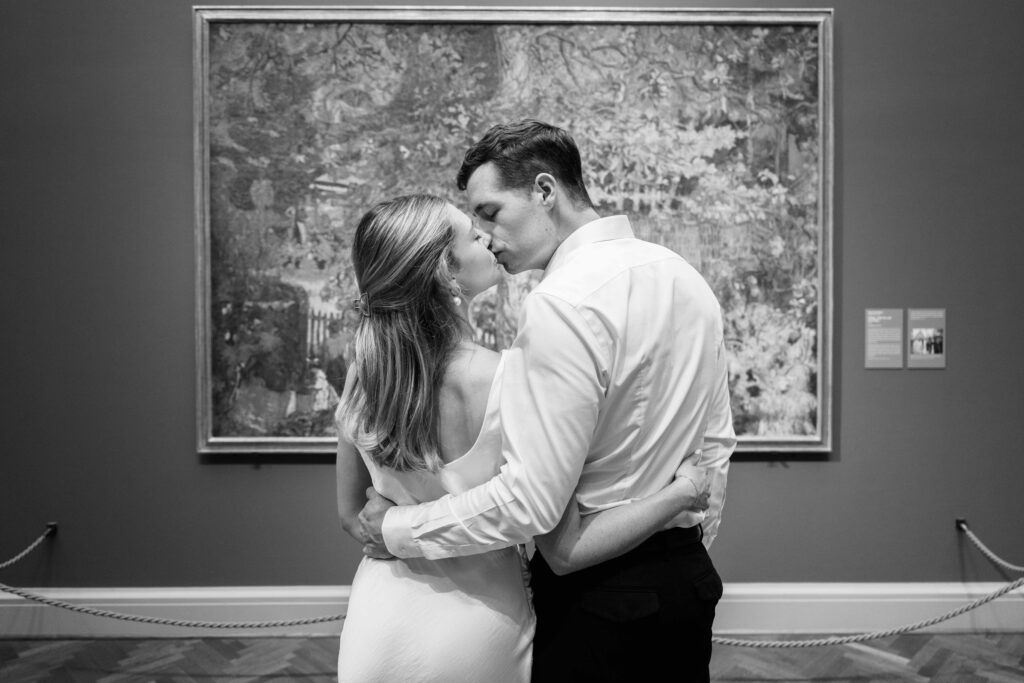
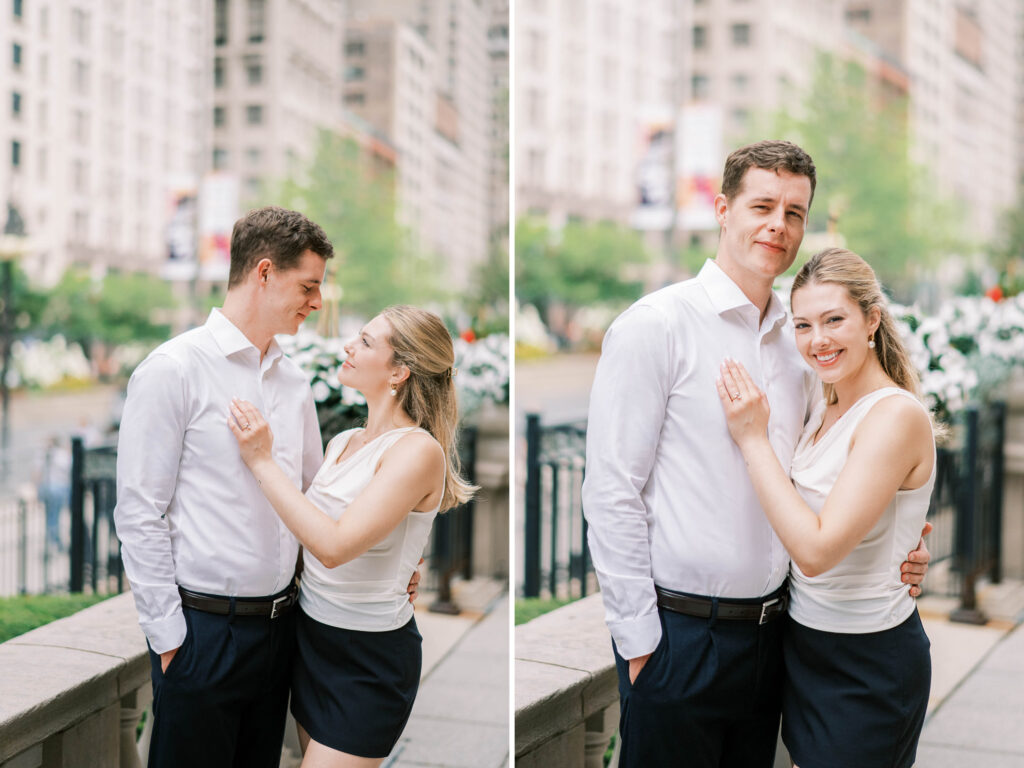
Quiet moments create contrast. Not every photo needs a wide smile or a grand gesture. I’ll direct you to stand close, look at each other, or take in the artwork in front of you. Those pauses often bring a sense of intimacy that feels timeless.
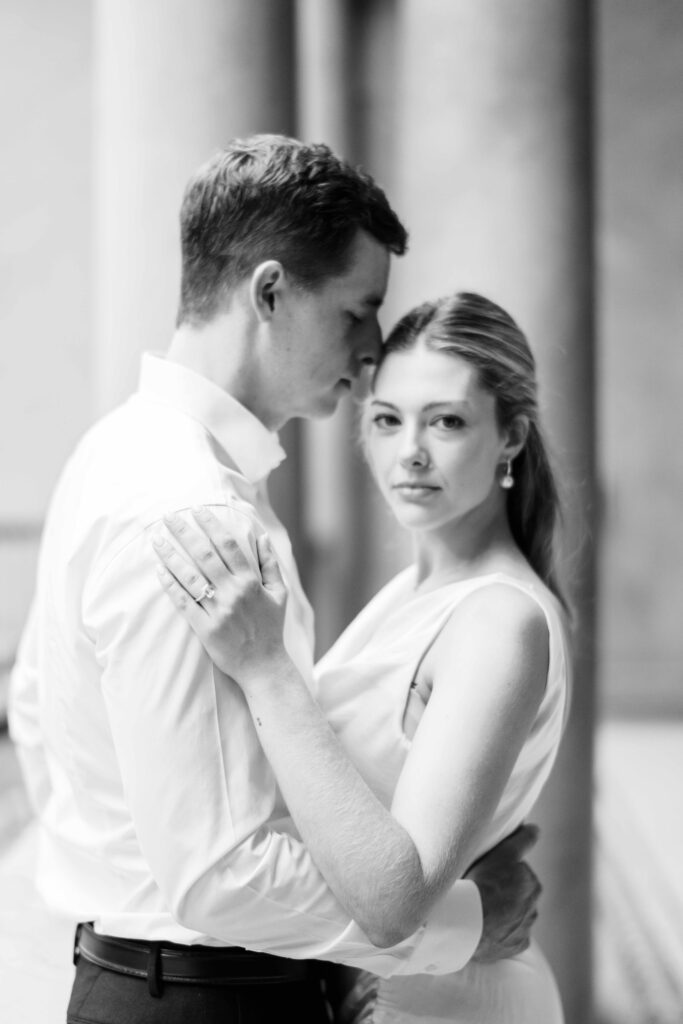
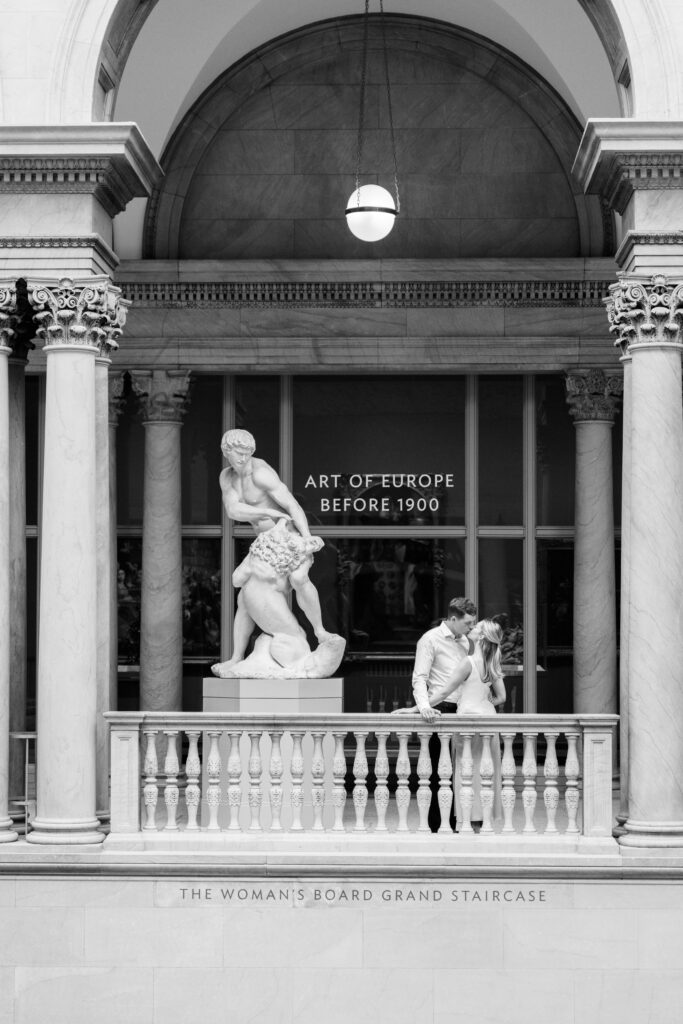
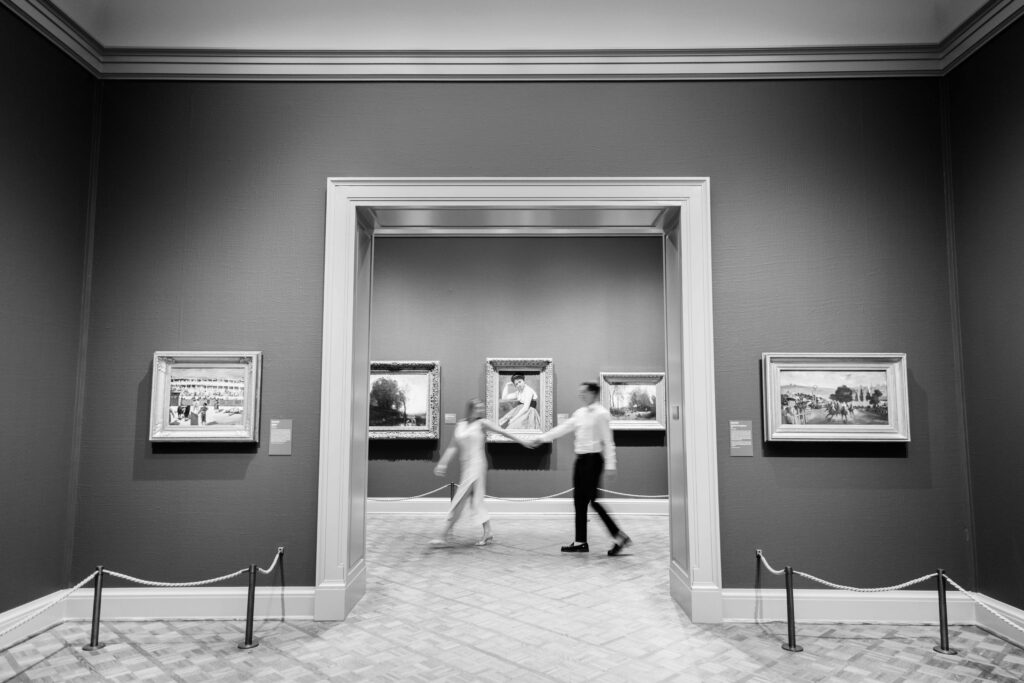
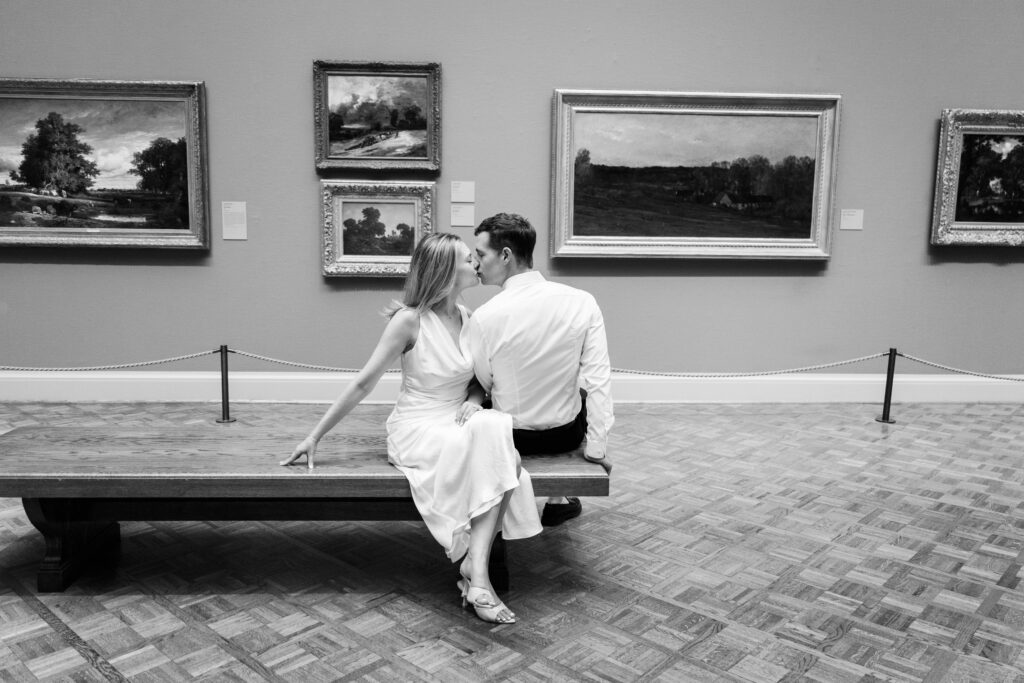
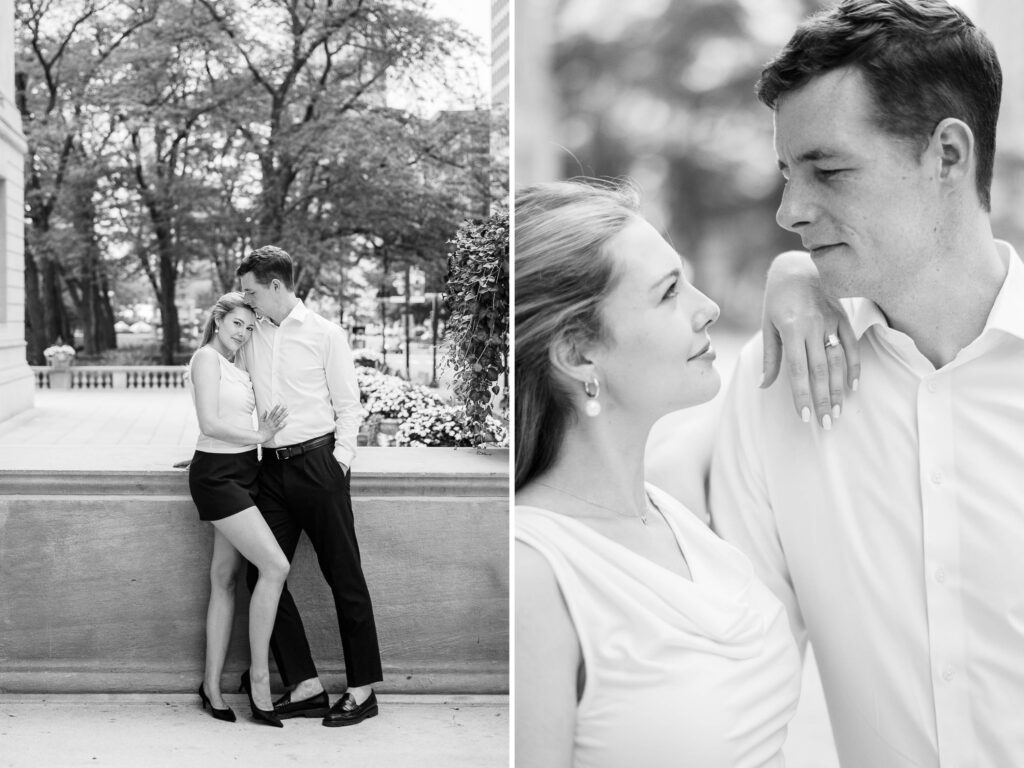
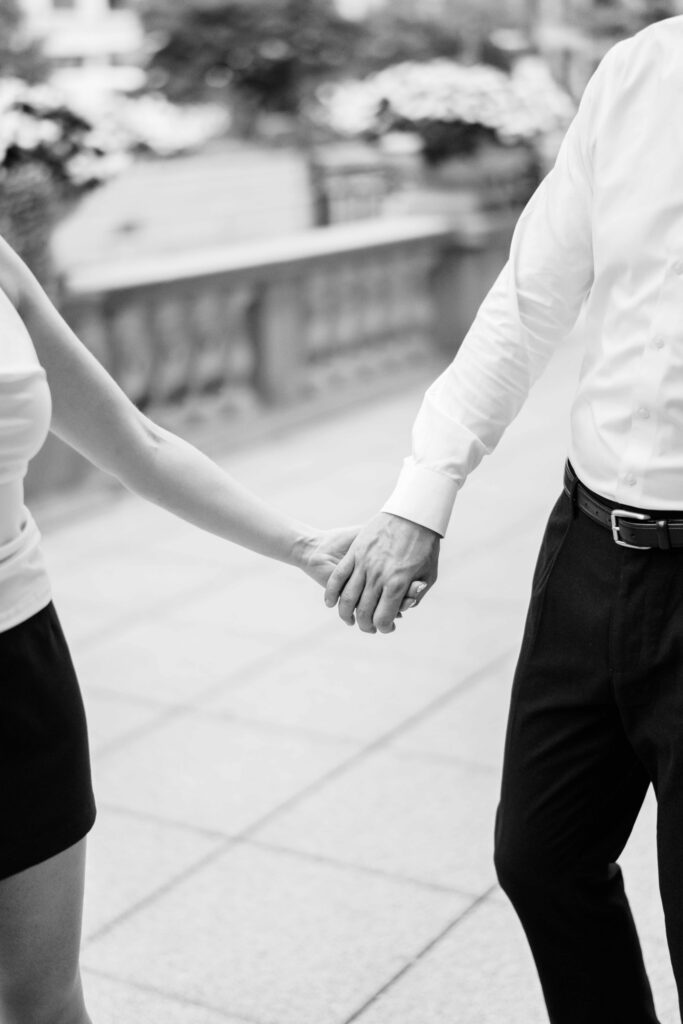
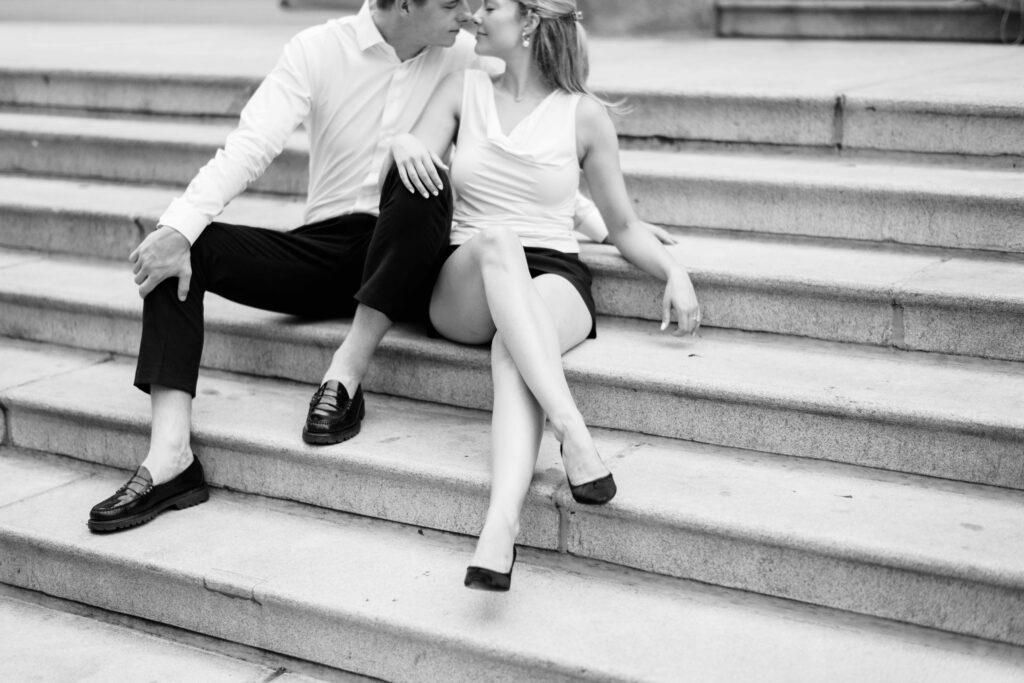
Black-and-white imagery also suits this style. Removing color can draw more attention to shape, light, emotion, and texture. A black-and-white image can make a portrait feel more like a study of connection than a record of a location. For a museum engagement session, black-and-white photography can be especially powerful.
The goal is not to make the photos look like someone else’s editorial spread but to create images that feel artful and true to you.
How to Plan Editorial Engagement Photos at the Art Institute of Chicago
Planning makes a difference at a space as iconic as the Art Institute. A little preparation keeps the session relaxed and the images intentional.
Start with your wardrobe. Choose pieces that complement the space without blending in—tailored silhouettes, clean lines, and movement work beautifully. A structured dress, suit, slip dress, or monochrome look fits naturally in a museum setting.
Avoid anything that needs constant adjusting. You should be able to move comfortably—walk, sit, turn. Since sessions often include indoor and outdoor portraits, choose shoes that allow easy movement throughout galleries and gardens.
Timing matters. The museum and surrounding areas can be busy, so planning around lighting, crowds, and hours can create a smoother experience. Indoor portraits require awareness of other visitors, while outdoor spaces offer more flexibility. (I’ll let you know my favorite times for a museum session during planning.)
A mix of indoor and outdoor locations works best. Gardens add softness and natural light, while interiors bring structure and an editorial edge, giving your gallery more range.
The Art Institute works so well because it offers variety without rush. We can create polished, architectural portraits, then shift to softer, candid moments—all within a single cohesive visual story.
Engagement Photos with Style and Feeling
I love photographing couples in spaces that already hold artistic weight. The Art Institute gave us structure, but their connection gave the images life.
Fine art engagement photography does not mean every photo has to feel serious or overly styled. Instead, it’s more about intentional layering. The light, location, composition, and emotion all work together.
For couples who care about aesthetics, an engagement session can be more than a warm-up for the wedding day; it can become its own collection of timeless images (and maybe your first professional photos together).
Nora and Austin moved through the Art Institute with ease, and their photos reflect that balance so many couples want now. Candid, but composed. Editorial, but warm. Beautiful, but not only beautiful.
That is where the strongest engagement photographs live.
Let’s Start Planning Your Session!